PSAT to SAT score conversion: What your PSAT predicts and how to use it

PSAT to SAT score conversion: What your PSAT predicts and how to use it

Date:

Date:

TL;DR: A PSAT score predicts your SAT score by adding roughly 80–100 points to your total, with no additional prep. A 1300 PSAT typically converts to 1380–1400 on the SAT; a 1400 PSAT typically converts to 1480–1500. But this estimate only holds if you take the SAT under similar conditions. Students who treat their PSAT score report as a diagnostic and prep strategically in the 6–12 months before the SAT consistently improve well beyond the baseline conversion.

You just got your PSAT score back. Maybe it's better than you expected, and you're wondering if that translates to a strong SAT. Maybe it's lower than you hoped, and now you're anxious about what that means for college admissions.

Here's what it actually means: a PSAT to SAT score conversion gives you a reliable starting point. It tells you where you are right now, not where you'll end up. The students who use that number well aren't the ones who feel relieved or panicked. They're the ones who open their score report, look at which questions they got wrong, and build a prep plan around those gaps.

This guide gives you the full conversion chart, explains how accurate the prediction really is, covers what your score means for National Merit, and shows you exactly how to use your PSAT results to prepare for the SAT.

How does the PSAT to SAT score conversion work?

PSAT to SAT score conversion works by aligning the two tests on a vertical scale, where a specific PSAT score generally predicts the same score on the SAT if taken on the same day. A 1300 PSAT predicts roughly a 1380–1400 SAT; a 1400 PSAT predicts roughly a 1480–1500 SAT. This relationship exists because the College Board designed both tests on the same vertical scale, meaning a 1300 on the PSAT reflects the same level of academic skill as a 1300 on the SAT. The conversion adds points because the SAT is harder and has a higher ceiling (1600 vs. 1520), so the scales need to be bridged.

The conversion isn't perfectly linear. At lower score ranges, the gap between PSAT and SAT equivalents is smaller. At the high end (1400+ PSAT), the gap widens slightly, as the hardest SAT questions cover material that goes beyond what the PSAT includes. This is why conversion estimates come as ranges rather than exact numbers.

One thing most guides won't tell you: composite-to-composite conversion is useful for planning, but section-by-section comparison is more effective for prep. 

In North American tutoring sessions, we compare students' PSAT Reading and Writing scores separately from their Math scores rather than looking only at the total. The sections can diverge significantly, and that gap almost always points directly to where the SAT prep should focus.

Full PSAT to SAT conversion chart

The table below covers every PSAT composite score from 320 to 1520, with the predicted SAT range under two conditions: no additional prep, and with 8+ weeks of targeted prep. 

PSAT Score

Predicted SAT (no prep)

Predicted SAT (with targeted prep)

1520

1590–1600

1600

1500

1570–1590

1590–1600

1480

1550–1570

1580–1600

1460

1530–1550

1560–1590

1440

1510–1530

1540–1570

1420

1490–1510

1520–1550

1400

1470–1500

1500–1540

1380

1450–1480

1480–1520

1370

1440–1470

1470–1510

1360

1430–1460

1460–1500

1350

1420–1450

1450–1490

1340

1410–1440

1440–1480

1330

1400–1430

1430–1470

1320

1390–1420

1420–1460

1310

1380–1410

1410–1450

1300

1370–1400

1400–1440

1290

1360–1390

1390–1430

1280

1350–1380

1380–1420

How accurate is the PSAT to SAT conversion?

The PSAT to SAT conversion is generally accurate within a 30 to 80-point range, assuming similar preparation and testing conditions, as the PSAT (1520 max) is scaled to predict the SAT (1600 max). While it serves as a strong baseline, it is not a guarantee; most students score higher on the SAT by 50–100+ points due to added maturity, schooling, and preparation.

What affects accuracy most is the gap between your PSAT and SAT section scores. As satscorecalculator.io notes, section-by-section conversion is more reliable than composite-to-composite conversion. Your PSAT Math score predicts your SAT Math score more consistently than your composite score predicts your composite score. Reading and Writing growth between 10th and 11th grade is often uneven, especially for students who read widely outside of school, because the skill develops in parallel with life experience in a way that Math doesn't.

Best Ivy League SAT Tutors

Work with elite tutors who have walked the path you are on. Personalised strategy for extraordinary results.

Book SAT Tutors

Best Ivy League SAT Tutors

Work with elite tutors who have walked the path you are on. Personalised strategy for extraordinary results.

Book SAT Tutors

What does your PSAT score mean for National Merit?

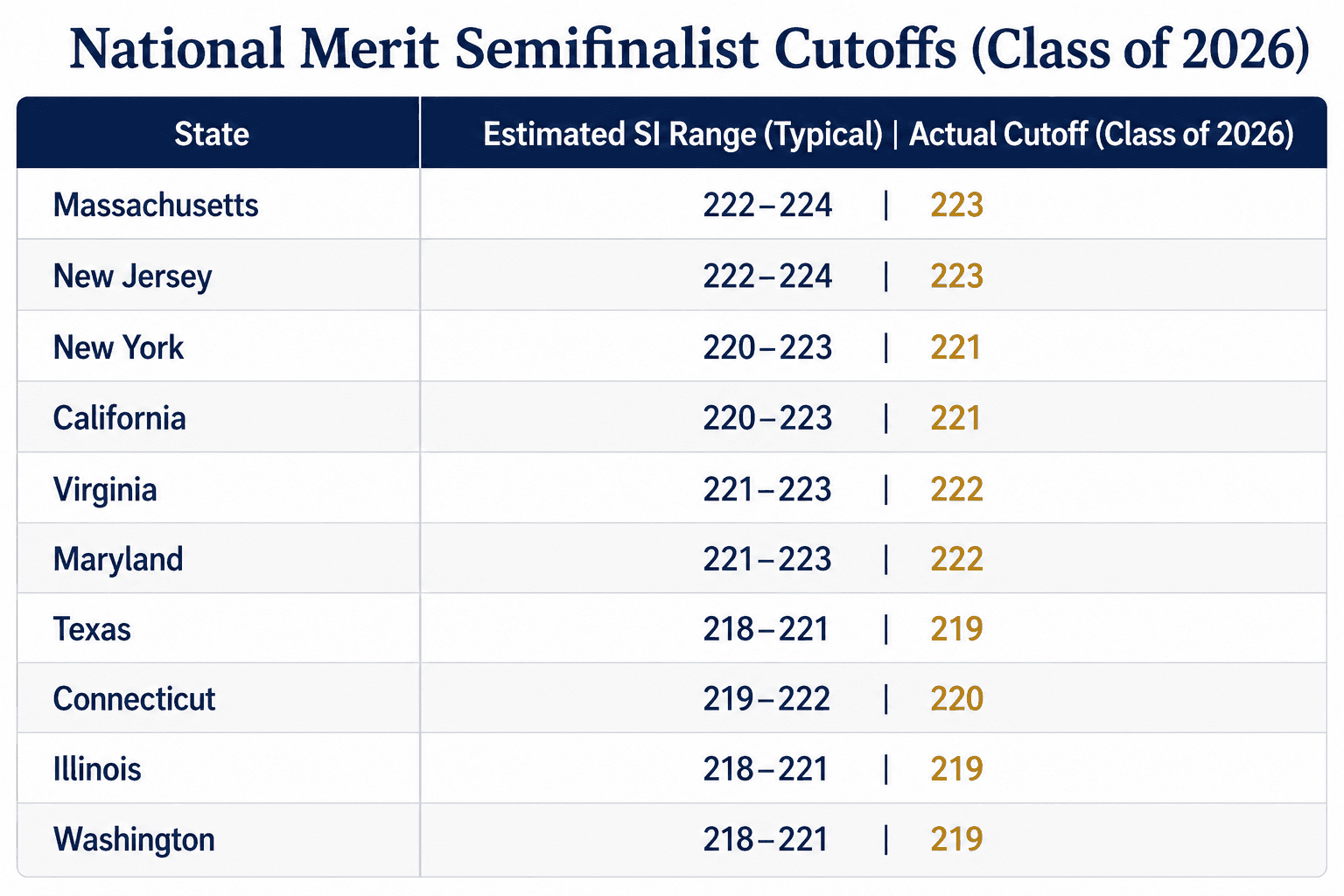
The PSAT/NMSQT score determines the eligibility for the National Merit Scholarship Program through a specific "Selection Index" (0–228 range), not the total 1520 scale. A score in the top 1% (approx. 207–224+, depending on your state) makes you a semifinalist. A score around 207-209 often earns Commended Student status, which is recognized but does not advance you. 

The national commended student cutoff for the Class of 2026 was 210. About 41,000 students earned that recognition. Commended status doesn't qualify you for scholarship money directly, but it's a meaningful academic honor that can be listed in the Honors section of the Common App, and some corporate sponsors offer special scholarships specifically for Commended Students.
How do I use my PSAT score to prepare for the SAT?

Most students open their PSAT score report, note the total, and close it. That's the single biggest missed opportunity in test prep.

The best way to prepare for the SAT is to use your PSAT score by analyzing your Score Report to identify weak areas across the 8 content domains, setting a target score, and using the best PSAT tutor classes. A 1520 PSAT score predicts a 1600 SAT score, and focusing on missed questions can boost your results. 

This is your prep roadmap. Not a general "study more" roadmap. A specific list of question types that cost you points on a standardized test taken in real conditions.

The timeline works in your favor. Most students take the PSAT in October of 10th or 11th grade. The first SAT sitting that makes sense for most juniors is March or May. That's a 5–7 month window. Students who consistently work on 2–3 specific weak areas during that window outperform those who spend the same hours doing full-length practice tests in isolation.

The free starting point is Khan Academy's official SAT prep, which connects directly to your College Board account and generates a personalized practice plan from your PSAT score report. It's genuinely useful, especially for students who are 100–150 points away from their target score.

If you are interested in a one-to-one session, meet Alexander Beji Joseph, who scored a 1600 on the SAT and works with students who have this exact gap. He sees the same thing consistently: the students who improve the most between the PSAT and SAT aren't the ones who do the most prep. They're the ones who do the most targeted prep. If your PSAT score report shows consistent errors in Advanced Math and Words in Context, and you spend 80% of your prep time on those two areas, you will outperform a student who spent twice as many hours doing untargeted practice.

For students still deciding whether to prioritize the SAT or consider the SAT vs ACT path, your PSAT performance is actually a useful signal. Strong PSAT results usually mean the SAT will feel familiar. If the PSAT felt uncomfortable despite solid preparation, it's worth taking a full-length ACT practice test to see if that format suits you better.

PSAT 8/9 and PSAT 10 to SAT conversion

The PSAT 8/9 (for 8th and 9th graders) and the PSAT 10 (for 10th graders) both sit on the same College Board vertical scale as the SAT and the PSAT/NMSQT. A score on any of these tests reflects the same underlying skill level, adjusted for the difficulty of each exam. The vertical scale allows a direct comparison across all four tests, even though each has a different score ceiling.

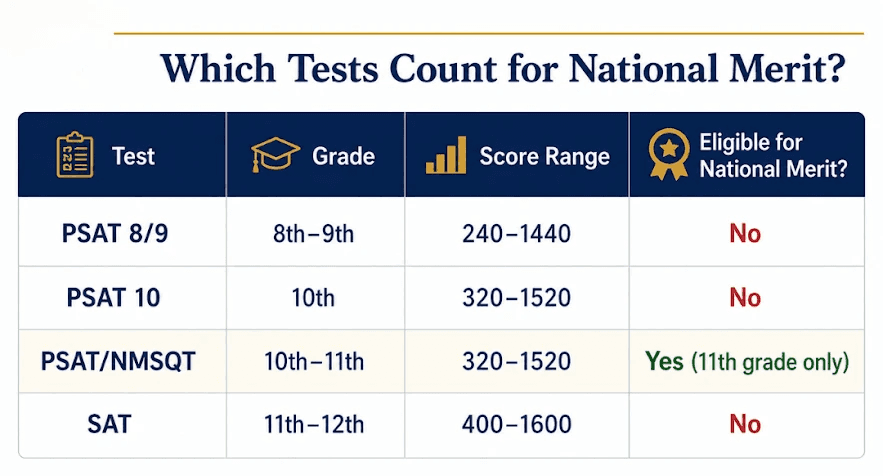
Here's how the score ranges compare across the full Suite of Assessments:

Test

Grade

Score Range

Eligible for National Merit?

PSAT 8/9

8th–9th

240–1440

No

PSAT 10

10th

320–1520

No

PSAT/NMSQT

10th–11th

320–1520

Yes (11th grade only)

SAT

11th–12th

400–1600

No

Conclusion

Whether you scored a 1200 on the PSAT and want to hit 1400 on the SAT, or you're sitting at 1400 and targeting 1500+ for a competitive state's National Merit cutoff, the work looks the same: start with your score report, identify the 2–3 question types that cost you the most points, and build focused prep around those areas specifically.

Book a free strategy session to map out your SAT target, what score is realistic given your PSAT baseline, and how to get there before your first official test date. 

If you're still in the prep phase and looking for free tools to start, the PSAT tutoring resource hub has guides and practice recommendations built for each stage of the process.

TL;DR: A PSAT score predicts your SAT score by adding roughly 80–100 points to your total, with no additional prep. A 1300 PSAT typically converts to 1380–1400 on the SAT; a 1400 PSAT typically converts to 1480–1500. But this estimate only holds if you take the SAT under similar conditions. Students who treat their PSAT score report as a diagnostic and prep strategically in the 6–12 months before the SAT consistently improve well beyond the baseline conversion.

You just got your PSAT score back. Maybe it's better than you expected, and you're wondering if that translates to a strong SAT. Maybe it's lower than you hoped, and now you're anxious about what that means for college admissions.

Here's what it actually means: a PSAT to SAT score conversion gives you a reliable starting point. It tells you where you are right now, not where you'll end up. The students who use that number well aren't the ones who feel relieved or panicked. They're the ones who open their score report, look at which questions they got wrong, and build a prep plan around those gaps.

This guide gives you the full conversion chart, explains how accurate the prediction really is, covers what your score means for National Merit, and shows you exactly how to use your PSAT results to prepare for the SAT.

How does the PSAT to SAT score conversion work?

PSAT to SAT score conversion works by aligning the two tests on a vertical scale, where a specific PSAT score generally predicts the same score on the SAT if taken on the same day. A 1300 PSAT predicts roughly a 1380–1400 SAT; a 1400 PSAT predicts roughly a 1480–1500 SAT. This relationship exists because the College Board designed both tests on the same vertical scale, meaning a 1300 on the PSAT reflects the same level of academic skill as a 1300 on the SAT. The conversion adds points because the SAT is harder and has a higher ceiling (1600 vs. 1520), so the scales need to be bridged.

The conversion isn't perfectly linear. At lower score ranges, the gap between PSAT and SAT equivalents is smaller. At the high end (1400+ PSAT), the gap widens slightly, as the hardest SAT questions cover material that goes beyond what the PSAT includes. This is why conversion estimates come as ranges rather than exact numbers.

One thing most guides won't tell you: composite-to-composite conversion is useful for planning, but section-by-section comparison is more effective for prep. 

In North American tutoring sessions, we compare students' PSAT Reading and Writing scores separately from their Math scores rather than looking only at the total. The sections can diverge significantly, and that gap almost always points directly to where the SAT prep should focus.

Full PSAT to SAT conversion chart

The table below covers every PSAT composite score from 320 to 1520, with the predicted SAT range under two conditions: no additional prep, and with 8+ weeks of targeted prep. 

PSAT Score

Predicted SAT (no prep)

Predicted SAT (with targeted prep)

1520

1590–1600

1600

1500

1570–1590

1590–1600

1480

1550–1570

1580–1600

1460

1530–1550

1560–1590

1440

1510–1530

1540–1570

1420

1490–1510

1520–1550

1400

1470–1500

1500–1540

1380

1450–1480

1480–1520

1370

1440–1470

1470–1510

1360

1430–1460

1460–1500

1350

1420–1450

1450–1490

1340

1410–1440

1440–1480

1330

1400–1430

1430–1470

1320

1390–1420

1420–1460

1310

1380–1410

1410–1450

1300

1370–1400

1400–1440

1290

1360–1390

1390–1430

1280

1350–1380

1380–1420

How accurate is the PSAT to SAT conversion?

The PSAT to SAT conversion is generally accurate within a 30 to 80-point range, assuming similar preparation and testing conditions, as the PSAT (1520 max) is scaled to predict the SAT (1600 max). While it serves as a strong baseline, it is not a guarantee; most students score higher on the SAT by 50–100+ points due to added maturity, schooling, and preparation.

What affects accuracy most is the gap between your PSAT and SAT section scores. As satscorecalculator.io notes, section-by-section conversion is more reliable than composite-to-composite conversion. Your PSAT Math score predicts your SAT Math score more consistently than your composite score predicts your composite score. Reading and Writing growth between 10th and 11th grade is often uneven, especially for students who read widely outside of school, because the skill develops in parallel with life experience in a way that Math doesn't.

Best Ivy League SAT Tutors

Work with elite tutors who have walked the path you are on. Personalised strategy for extraordinary results.

Book SAT Tutors

What does your PSAT score mean for National Merit?

The PSAT/NMSQT score determines the eligibility for the National Merit Scholarship Program through a specific "Selection Index" (0–228 range), not the total 1520 scale. A score in the top 1% (approx. 207–224+, depending on your state) makes you a semifinalist. A score around 207-209 often earns Commended Student status, which is recognized but does not advance you. 

The national commended student cutoff for the Class of 2026 was 210. About 41,000 students earned that recognition. Commended status doesn't qualify you for scholarship money directly, but it's a meaningful academic honor that can be listed in the Honors section of the Common App, and some corporate sponsors offer special scholarships specifically for Commended Students.

How do I use my PSAT score to prepare for the SAT?

Most students open their PSAT score report, note the total, and close it. That's the single biggest missed opportunity in test prep.

The best way to prepare for the SAT is to use your PSAT score by analyzing your Score Report to identify weak areas across the 8 content domains, setting a target score, and using the best PSAT tutor classes. A 1520 PSAT score predicts a 1600 SAT score, and focusing on missed questions can boost your results. 

This is your prep roadmap. Not a general "study more" roadmap. A specific list of question types that cost you points on a standardized test taken in real conditions.

The timeline works in your favor. Most students take the PSAT in October of 10th or 11th grade. The first SAT sitting that makes sense for most juniors is March or May. That's a 5–7 month window. Students who consistently work on 2–3 specific weak areas during that window outperform those who spend the same hours doing full-length practice tests in isolation.

The free starting point is Khan Academy's official SAT prep, which connects directly to your College Board account and generates a personalized practice plan from your PSAT score report. It's genuinely useful, especially for students who are 100–150 points away from their target score.

If you are interested in a one-to-one session, meet Alexander Beji Joseph, who scored a 1600 on the SAT and works with students who have this exact gap. He sees the same thing consistently: the students who improve the most between the PSAT and SAT aren't the ones who do the most prep. They're the ones who do the most targeted prep. If your PSAT score report shows consistent errors in Advanced Math and Words in Context, and you spend 80% of your prep time on those two areas, you will outperform a student who spent twice as many hours doing untargeted practice.

For students still deciding whether to prioritize the SAT or consider the SAT vs ACT path, your PSAT performance is actually a useful signal. Strong PSAT results usually mean the SAT will feel familiar. If the PSAT felt uncomfortable despite solid preparation, it's worth taking a full-length ACT practice test to see if that format suits you better.

PSAT 8/9 and PSAT 10 to SAT conversion

The PSAT 8/9 (for 8th and 9th graders) and the PSAT 10 (for 10th graders) both sit on the same College Board vertical scale as the SAT and the PSAT/NMSQT. A score on any of these tests reflects the same underlying skill level, adjusted for the difficulty of each exam. The vertical scale allows a direct comparison across all four tests, even though each has a different score ceiling.

Here's how the score ranges compare across the full Suite of Assessments:

Test

Grade

Score Range

Eligible for National Merit?

PSAT 8/9

8th–9th

240–1440

No

PSAT 10

10th

320–1520

No

PSAT/NMSQT

10th–11th

320–1520

Yes (11th grade only)

SAT

11th–12th

400–1600

No

Conclusion

Whether you scored a 1200 on the PSAT and want to hit 1400 on the SAT, or you're sitting at 1400 and targeting 1500+ for a competitive state's National Merit cutoff, the work looks the same: start with your score report, identify the 2–3 question types that cost you the most points, and build focused prep around those areas specifically.

Book a free strategy session to map out your SAT target, what score is realistic given your PSAT baseline, and how to get there before your first official test date. 

If you're still in the prep phase and looking for free tools to start, the PSAT tutoring resource hub has guides and practice recommendations built for each stage of the process.
Frequently Asked Questions

Is PSAT to SAT conversion accurate?

PSAT to SAT conversion is usually accurate within a 30 to 50 point range if preparation levels remain similar. Actual SAT results depend on how much targeted prep a student completes after the PSAT and how well they manage pacing and test day pressure.

Is PSAT to SAT conversion accurate?

PSAT to SAT conversion is usually accurate within a 30 to 50 point range if preparation levels remain similar. Actual SAT results depend on how much targeted prep a student completes after the PSAT and how well they manage pacing and test day pressure.

What PSAT score predicts a 1500 on the SAT?

A PSAT score in the mid to high 1400s often indicates the potential for a 1500+ SAT score, especially with focused prep. However, reaching that level usually requires improving consistency, timing, and accuracy beyond what PSAT conversion alone suggests.

What PSAT score predicts a 1500 on the SAT?

A PSAT score in the mid to high 1400s often indicates the potential for a 1500+ SAT score, especially with focused prep. However, reaching that level usually requires improving consistency, timing, and accuracy beyond what PSAT conversion alone suggests.

How does PSAT prep affect SAT scores?

Strong PSAT prep builds foundational skills, reduces careless errors, and improves pacing, all of which transfer directly to the SAT. Students who prepare seriously for the PSAT often see larger SAT score gains later.

How does PSAT prep affect SAT scores?

Strong PSAT prep builds foundational skills, reduces careless errors, and improves pacing, all of which transfer directly to the SAT. Students who prepare seriously for the PSAT often see larger SAT score gains later.

How does PSAT 8/9 score conversion differ from PSAT 10?

PSAT 8/9 scores are scaled lower than PSAT 10 and PSAT NMSQT scores, so conversions to SAT scores are less direct. PSAT 8/9 is best used as an early diagnostic rather than a precise SAT predictor.

How does PSAT 8/9 score conversion differ from PSAT 10?

PSAT 8/9 scores are scaled lower than PSAT 10 and PSAT NMSQT scores, so conversions to SAT scores are less direct. PSAT 8/9 is best used as an early diagnostic rather than a precise SAT predictor.

Get the Ivy League Advantage

Get the Ivy League Advantage

Work with elite tutors who have walked the path you are on. Personalised strategy for extraordinary results.

Work with elite tutors who have walked the path you are on. Personalised strategy for extraordinary results.

Book a free consultation

Book a free consultation

Related Articles

High school textbooks and microscope representing world university rankings by subject

College Admissions

THE World University Rankings by Subject 2026 Explained

THE World University Rankings by Subject 2026 Explained

Read article

Google Gemini AI logo beside SAT practice test sheet

SAT

Google Gemini SAT Practice Tool Review | Is It Reliable?

Google Gemini SAT Practice Tool Review | Is It Reliable?

Read article

AP Physics circular motion and gravitation diagrams with orbit illustrations

Physics

AP Physics 1 Unit 3 Cheat Sheet: Circular Motion and Gravitation

AP Physics 1 Unit 3 Cheat Sheet: Circular Motion and Gravitation

Read article

High school textbooks and microscope representing world university rankings by subject

College Admissions

THE World University Rankings by Subject 2026 Explained

Read article

Google Gemini AI logo beside SAT practice test sheet

SAT

Google Gemini SAT Practice Tool Review | Is It Reliable?

Read article

AP Physics circular motion and gravitation diagrams with orbit illustrations

Physics

AP Physics 1 Unit 3 Cheat Sheet: Circular Motion and Gravitation

Read article

Harvard University campus with global rankings 2025 headline graphic

College Admissions

Harvard Drops to 3rd in Global Rankings 2025 | What It Means

Read article

Get Notifications For Each Fresh Post

Get Notifications For Each Fresh Post