Online MCAT tutors, scored 520 to 524, who are in medical school themselves
Every tutor on the North American Tutors MCAT roster is a current medical student or recent medical school graduate with a verified score between 520 and 524 on the MCAT. They studied at Brown University School of Medicine, the University of Virginia School of Medicine, Georgetown University, Johns Hopkins University, and Duke University. Sessions are one-on-one, online, and matched by a person.
We'll find the perfect tutor for you based on your requirements!
MCAT
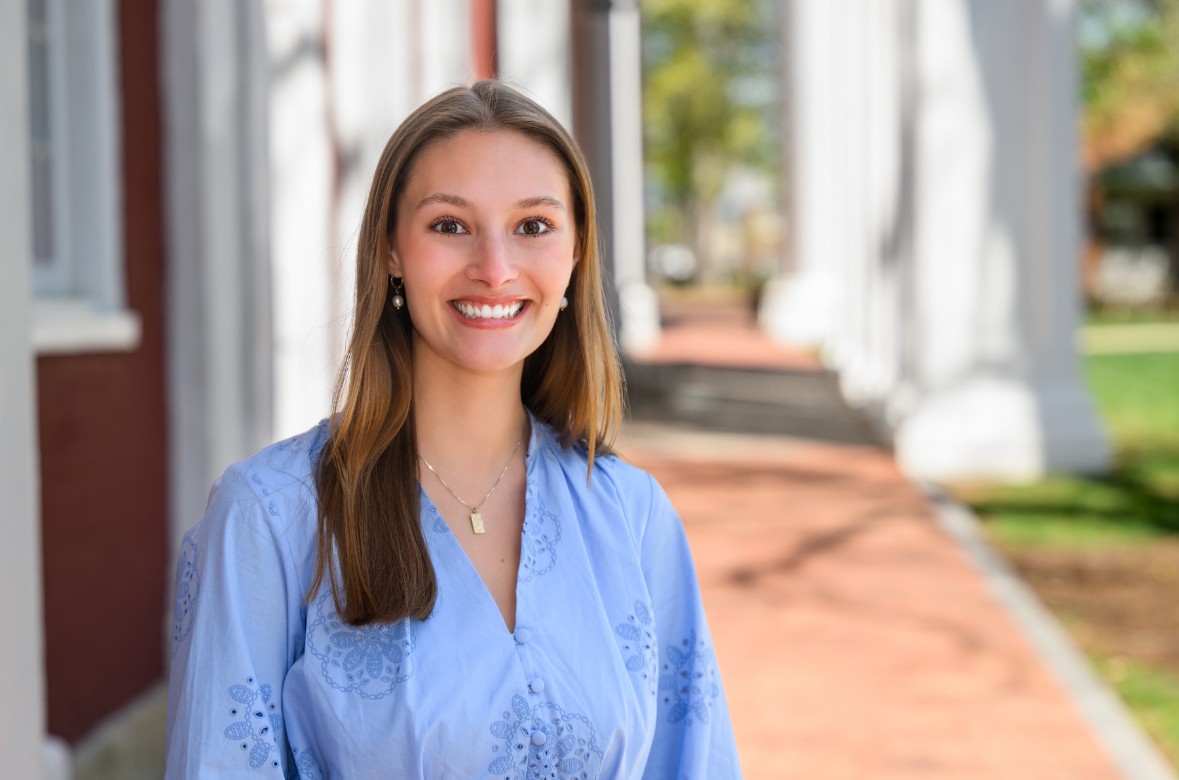
Kristina is a Johnson Scholar graduate of Washington & Lee University, where she earned her degree in Biology. She recently returned from the Netherlands, where she was completing public health research on socioeconomic barriers…
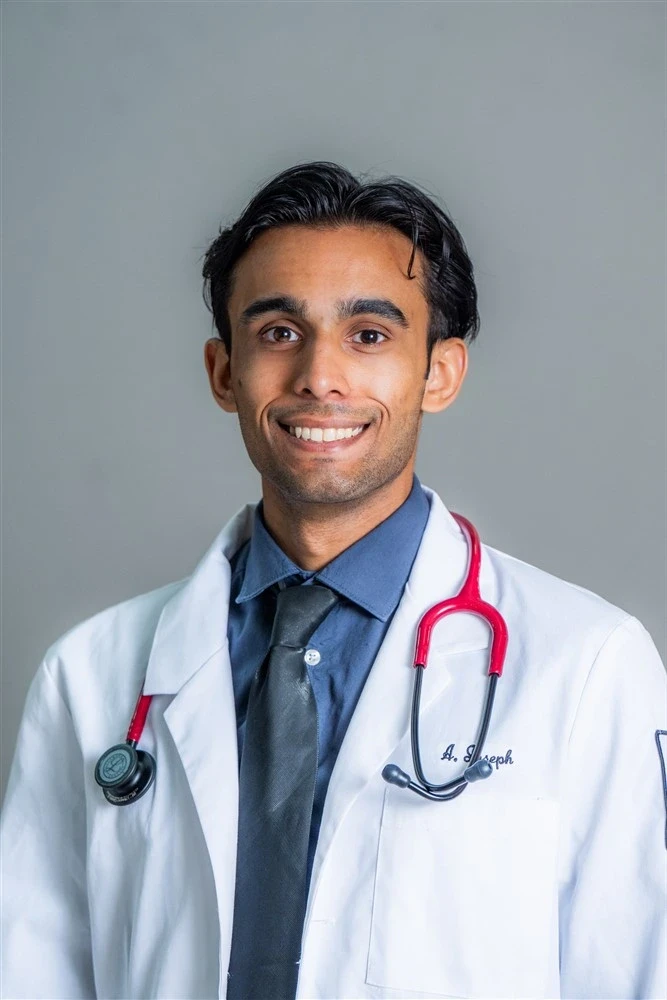
Before medical school, Alexander graduated summa cum laude in Biochemistry from Northeastern University (GPA 3.95) and contributed to scientific research as a co‑author on publications including Nature Metabolism (2020)...

Adithya Sivakumar is a medical student and experienced tutor specializing in the MCAT, with additional expertise in the SAT and ACT. He is currently a medical student at the University of Virginia School of Medicine…
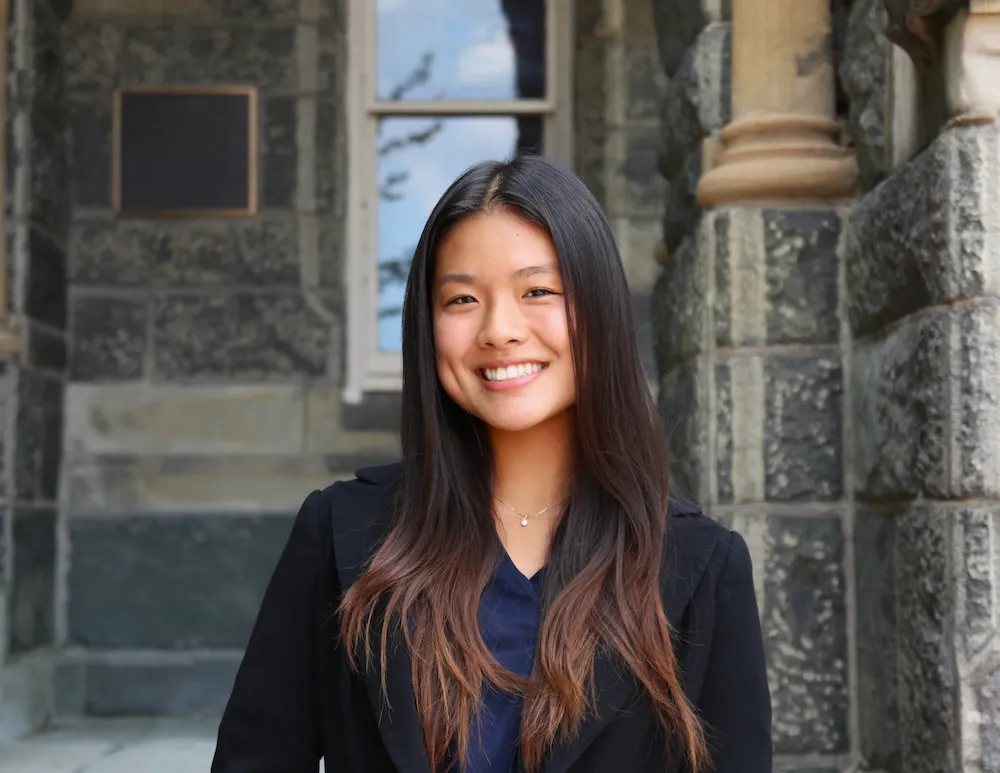
She is a recent graduate of Georgetown University and is currently pursuing her Master’s in Public Health at Vrije Universiteit Amsterdam through a U.S. Fulbright Scholarship. Her research background is extensive...

Sal teaches the MCAT, ACT, and college application preparation. A rising senior at Duke University majoring in Biology, Marine Science, and Conservation, he scored a 520 on the MCAT (97th percentile) and carries a 4.0…


1
Tell us about your student
Submit the contact form with the student's most recent MCAT score or practice test result by section, their target score, their intended application cycle, and which sections are furthest from target. If this is a first attempt with no prior practice test, that's fine. We start with a diagnostic.
2
We select two or three tutors
A person on our team reviews the submission and identifies tutors whose score profile and section strengths fit. A student who needs CARS improvement is a different match than one whose C/P chemistry content has gaps. We select based on section-level fit, not just composite score.
3
First session for $50
The first session lasts 60 minutes. The tutor reviews the student's most recent practice test or runs a diagnostic passage set, identifies the question-type patterns where points are being lost, and builds a section-level starting plan. You pay $91 per session, with no package commitment required.
4
Adjust if the match is wrong
If the tutor isn't the right fit, for any reason, let us know and we'll reassign. There's no fee and no waiting period.
What an online MCAT tutoring session covers
For C/P and B/B, sessions typically work through official AAMC passage sets: the tutor identifies where the student's reasoning is breaking down, whether that's content gaps, passage-reading efficiency, or question-type strategy. For CARS, the approach shifts entirely to reading technique and argument structure. Content knowledge doesn't help in CARS. CARS tutors focus on how a student is reading, not what they already know.
Between sessions, tutors assign practice questions drawn from the official AAMC question bank and full-length exams. The AAMC materials are the only ones that accurately reflect the current test. Students receive written feedback after each session. If a section score plateaus after several sessions, the tutor flags it and adjusts the approach rather than repeating the same plan.
The MCAT overview page has more on how the four sections are structured and what each one tests.
What to look for when you hire an online MCAT tutor
MCAT tutoring is a significant financial and time commitment. These are the criteria that actually predict whether a tutoring match will produce a score change.
Check the tutor's MCAT score and which version they took
The MCAT was substantially revised in 2015. The current version tests C/P, CARS, B/B, and P/S. A tutor who took the pre-2015 exam has no direct experience with the current test design. Ask for the score and the year.
Understand whether the tutor has content depth in your weak sections
The MCAT covers biochemistry, biology, general and organic chemistry, physics, psychology, and sociology at a level that requires genuine content knowledge to teach. A tutor who scored 130 in C/P and 124 in CARS has a very different profile than one who scored 128 across all four sections. Ask for section-level scores, not just the composite.
Ask specifically about CARS preparation
CARS is the section where many pre-med students struggle most, and it is also the section that responds least to content review. Ask the tutor how they approach CARS sessions. If the answer is "we work through passages together," that's reasonable. If it's vague, press for specifics.
Ask what the first session produces
A session that ends with a section-level plan stating where the student is, which question types are costing points, and what the next four weeks look like is worth the session fee. A session that ends with a general recommendation to "do more practice" is not.
Know when private tutoring is not the right tool
If a student is starting MCAT prep more than six months before their test date and has no significant content gaps, structured self-study with official AAMC materials is a reasonable first phase. Private tutoring earns its cost when a specific section has not moved after several weeks of self-study, when the timeline is short, or when CARS is the limiting factor and the student needs technique work that self-study cannot provide. You can see how past students approached this decision in our MCAT success stories.
MCAT prep options compared
Private one-on-one tutoring is one of several realistic ways to prepare for the MCAT. Here is an honest comparison.
Who benefits from private online MCAT tutoring
This service tends to work well for:
Students targeting 514+ who have plateaued after several weeks of self-study
Students with fewer than 16 weeks to test date and a 6+ point gap to target
Students where CARS is the section limiting the composite and self-study has not moved it
Students who need a tutor with firsthand medical school experience, not just standardized test experience
Retakers who need a fundamentally different approach than their first attempt
This service is probably not the right fit if:
You are 6+ months from test date, have no significant content gaps, and can sustain a structured self-study schedule with official AAMC materials
Your target score gap is 2 to 3 points and you have not yet exhausted the official AAMC question bank
Budget requires a group-prep option for the content review phase
What students on this roster have achieved
No composite score-gain averages are published here because the data does not exist to make that claim accurately. What exists is the individual credential of each tutor, which is verifiable from their profile pages, and the published case studies from NAT students across all subjects.
For MCAT specifically, the credential argument is stronger than on any other test: every tutor on this page passed the exam at the 97th percentile or above and then went on to apply to medical school. Alexander Beji Joseph graduated summa cum laude from Northeastern before entering Brown Medical and has co-authored research in Nature Metabolism. Leah Chen is now on a Fulbright Scholarship in public health after Georgetown. These are the tutors. Their outcome is their credential.

FAQ’s
Frequently Asked Questions
What does an MCAT tutor cost?
A single session costs $91 for 60 minutes, with no package commitment required. Packages reduce the per-session rate: 10 sessions for $845 ($84.50 per session), 15 sessions for $1,170 ($78 per session), or 20 sessions for $1,420 ($71 per session). There are no long-term contracts and no hidden fees. Full package details are on the MCAT tutoring pricing page.
How many MCAT tutoring sessions does a student typically need?
It depends on the starting score, the section gaps, and how much time exists before the test date. Many students work with a tutor for 10 to 20 sessions. A student targeting a 6-point composite improvement with 12 to 16 weeks available typically uses 15 sessions alongside consistent independent practice. A student focusing on a single section for 8 weeks may need fewer. The first session identifies where the gaps are and makes the session count easier to estimate.
Do your MCAT tutors have medical school experience, not just high test scores?
Yes. Every tutor on the MCAT roster is a current medical student or recent medical school graduate. Alexander Beji Joseph is enrolled at Brown University School of Medicine. Adithya Sivakumar is an MD candidate at the University of Virginia School of Medicine. Leah Chen graduated from Georgetown on the pre-med track and is now on a Fulbright. Tutoring the MCAT is not a side activity for them it is directly connected to the path they're on.
My student has already taken the MCAT once. Can tutoring help for a retake?
Yes. Retakers who have identified which sections limited their score on the first attempt often see the highest return from targeted tutoring. If CARS was the limiting section and self-study didn't improve it, then working with a tutor who scored 130 in that section on CARS-specific techniques is a different intervention than doing another six weeks of passages. The first session for retakers focuses on diagnosing why prior prep did not produce the expected gain.
How is MCAT tutoring different from SAT or ACT tutoring?
The MCAT covers graduate-level content in biochemistry, biology, chemistry, physics, psychology, and sociology, and tests scientific reasoning across 230 questions over 7.5 hours. It requires both content knowledge and test strategy, and the two are developed differently for each section. SAT and ACT tutors on the NAT roster are high scorers; MCAT tutors are medical students. The preparation required to teach the MCAT well is materially different, which is why MCAT sessions are priced differently.
Do you offer in-person MCAT tutoring?
No. All sessions are online, one-on-one, over video. This allows access to tutors who are currently enrolled in medical schools across the US, regardless of the student's location. Shared screen sessions work well for the MCAT because tutors can annotate passages, draw diagrams, and work through official AAMC questions together in the same format students see on the actual exam. The MCAT overview page has more on how the online format applies to each section.
What is the MCAT and what does it test?
The MCAT is a standardized exam required for admission to most medical schools in the US and Canada. It has four sections: Chemical and Physical Foundations of Biological Systems (C/P), Critical Analysis and Reasoning Skills (CARS), Biological and Biochemical Foundations of Living Systems (B/B), and Psychological, Social, and Biological Foundations of Behavior (P/S). The total exam takes approximately 7.5 hours including breaks. Scores range from 472 to 528. A score of 511 is approximately the 80th percentile.