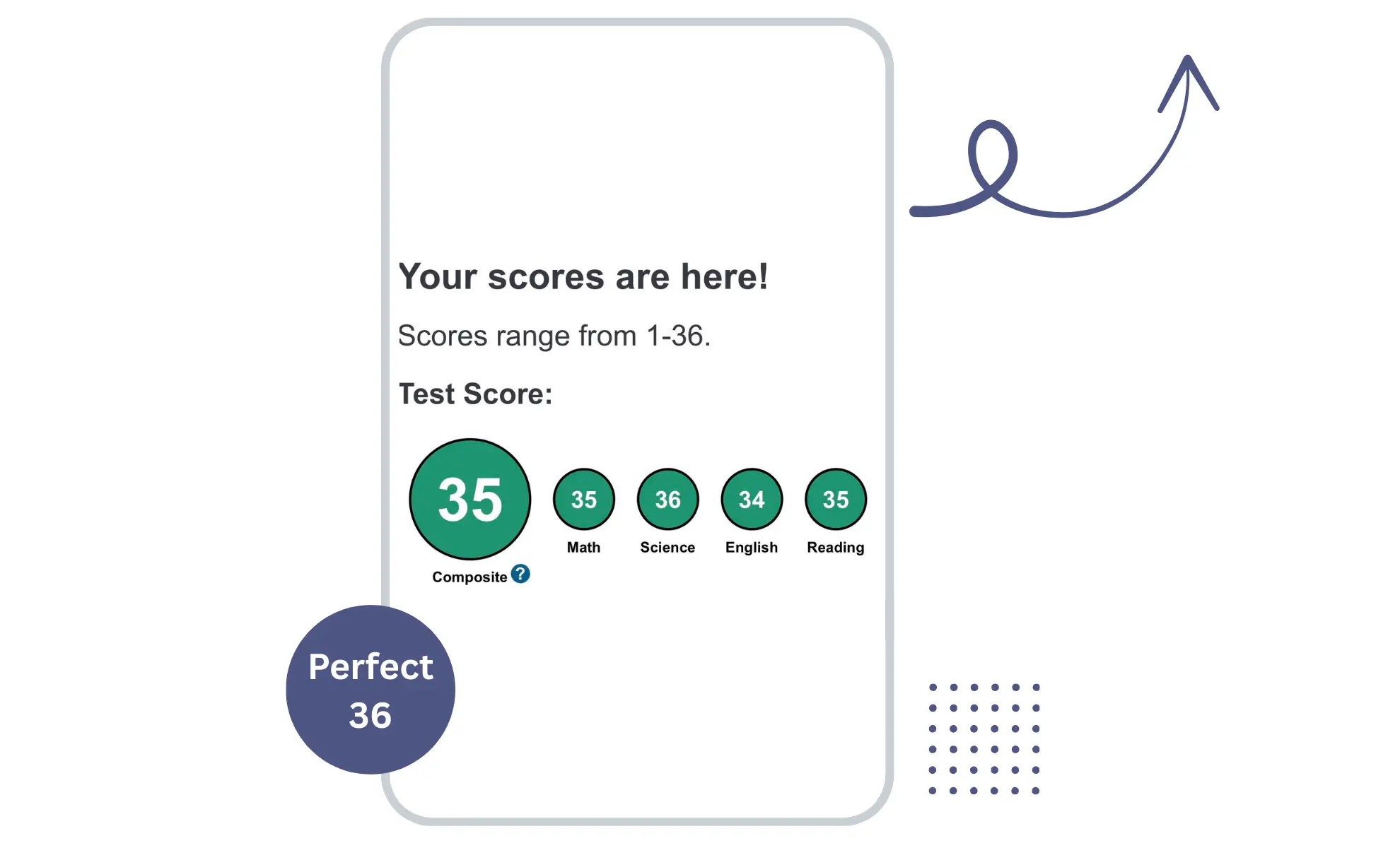
How Alex.R Jumped from a 30 to a 35 on the ACT!
When Alex.R first came to North American Tutors, he already had a 30 on the ACT, a strong score by most standards. But he was aiming higher. He wanted to break into the 35+ range for competitive college admissions and merit-based scholarships.
Working closely with Armaghan Naveed, Alex spent six weeks transforming his approach. He didn’t need new content; he needed execution, structure, and a way to stay sharp under pressure. The result? A near-perfect 35 on his next official ACT.
Starting Point: Solid Fundamentals, But Avoidable Errors
Alex had a strong grasp of the test’s content. What was holding him back were:
Rushing through early questions
Changing correct answers under pressure
Careless errors in Math and English
Struggles with timing on Reading
“Alex knew the material well,” Armaghan shared after their first session. “Our goal was to slow him down, build his test-day composure, and sharpen his strategy per section.”
Phase One: Identifying the Score Leaks
The first two weeks were spent diagnosing Alex’s exact pain points:
English: missed points on punctuation and tone due to second-guessing
Math: careless arithmetic or overcomplicating problems
Reading: misreading questions under pressure
Science: losing time interpreting graphs
Instead of focusing on general content, Armaghan helped Alex:
Sort errors into patterns (timing, misreading, uncertainty)
Develop short strategies for each problem type
Shift from “I think” to “I know why this is the answer”
By the end of Phase One, Alex was scoring 32–33 consistently on section tests.
Phase Two: Section-by-Section Pacing & Precision
In Phase Two, Alex began taking full-length exams under timed conditions. Armaghan coached him on:
English: trusting his first instinct and applying grammar logic rather than memorizing rules
Math: using estimation and elimination to save time on long algebra questions
Reading: previewing questions first and scanning with a purpose
Science: skimming for graph trends and question keywords
They built out custom pacing benchmarks:
English: finish with 5 minutes to check flagged questions
Math: finish with 3 to recheck calculations
Reading: 8–8–8–8 minute targets by passage
Science: skip-and-return for conflicting viewpoints
“Alex started using every second of his time productively. That’s when his accuracy jumped.”
Practice scores moved to 34–35 range, with only minor inconsistencies left.
Phase Three: Confidence, Focus, and Final Polish
The final two sessions were all about psychology and endurance. Alex had everything he needed, now it was about staying calm and consistent.
Armaghan focused on:
What to do if you blank out mid-section
When to override your first answer (almost never)
How to warm up before the test with low-pressure review problems
Building a routine for the morning of the exam
“Alex wasn’t missing content, he was battling test-day nerves. Once he realized that, everything changed.”
They reviewed his last few mistakes, confirmed his strongest sections, and rehearsed test-day strategies one final time.
The Breakthrough: ACT 35
Alex sat for his ACT feeling more prepared than ever. No surprises, no panic, no what-ifs.
Official ACT Score: 35
English: 36
Math: 35
Reading: 35
Science: 34Why Alex’s Story Matters
Alex didn’t study harder - he studied smarter. He already had the content knowledge. What changed was his execution. He focused on the small refinements that separate a 30 from a 35: timing, clarity, and test-day control.
At North American Tutors, we help students like Alex reach their full potential, not by reteaching everything, but by teaching what actually moves the needle.