What's a Good SAT Score for Ivy League Universities in 2026?

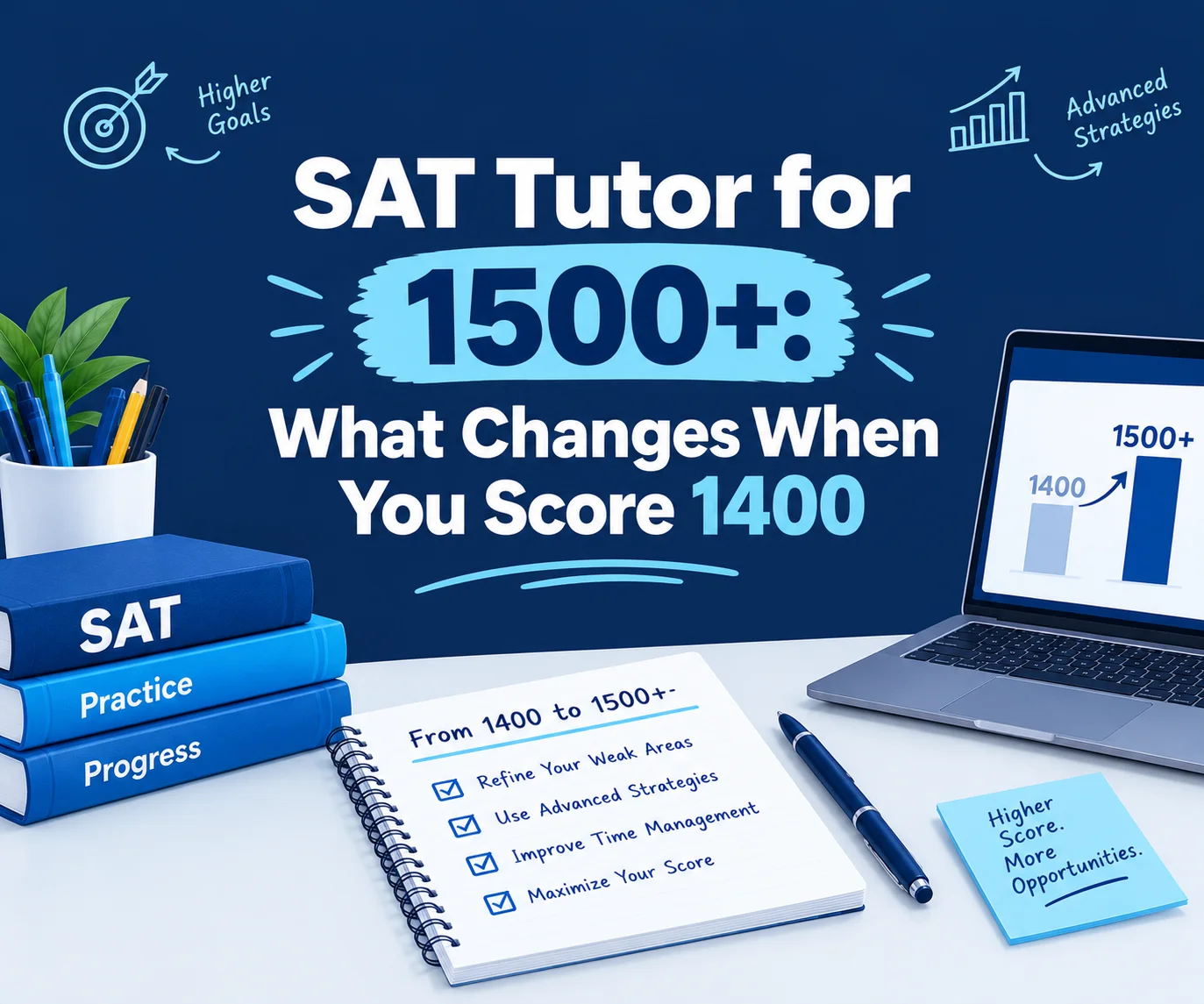
Imagine you've just got your SAT score back. A 1400. That puts you in the 93rd percentile of all U.S. test-takers, a genuinely impressive result that the vast majority of students never reach. But then you start researching what it takes to get into the Ivy League, and suddenly that number feels different.
That feeling is not irrational. It is the reality of how competitive these eight schools are. A good SAT score for Ivy League admission is around 1480-1500, and students who feel most secure typically score between 1530 and 1580. Understanding the exact benchmarks for each school can help your family make smarter decisions about test prep, retakes, and how to build the rest of the application.
Here is everything you need to know about SAT scores for Ivy League admission in 2026.
What SAT Scores Do Ivy League Schools Actually Expect?
A competitive SAT score for Ivy League admission in 2026 starts at roughly 1480, with the middle 50% of admitted students scoring between 1480 and 1580. The national average SAT score is approximately 1024, which means Ivy League admits score nearly 500 points above the typical test-taker. Fewer than 7% of all students who take the SAT score in the 1400-to-1600 range, and that is the floor for serious Ivy League competition.
The "middle 50%" figure is the most useful data point to understand. It represents the range between the 25th and 75th percentiles of admitted students. If your child scores at the 75th percentile for their target school, their SAT no longer raises doubts. Their file moves from "Can they handle the coursework?" to "Do we want them in our community?" That shift matters.
One more stat worth holding onto: admitted students at top Ivy League schools score in the top 1-2% of all test-takers nationally. That context reframes what "good" really means in this process.
SAT Score Ranges by Ivy League School (2026 Data)
The table below shows the middle 50% SAT score range for admitted students at each Ivy League school, along with the current testing policy for the 2026 admissions cycle.
School | Middle 50% SAT Range | 2026 Test Policy |
|---|---|---|
1500–1580 | Required | |
1470–1580 | Test-flexible (SAT, ACT, AP, or IB) | |
1460–1570 | Test-optional (through 2026-27) | |
1460–1570 | Required | |
1450–1570 | Permanently test-optional | |
1440–1570 | Required | |
1430–1560 | Required | |
1430–1550 | Required |
A few things stand out in this data.
First, Harvard and Yale sit at the top. Harvard's middle 50% range of 1500-1580 is the tightest and highest among all eight schools. Yale's range is nearly identical, and both schools attract students who are scoring at the absolute ceiling of the test.
Second, Cornell and Dartmouth show the most flexibility, with 25th percentiles beginning at 1430. That still places you in the 97th percentile nationally, but it does offer slightly more room than Harvard or Yale.
Third, at almost every Ivy League school, the top 25% of admitted students scored a perfect 800 on the Math section. A strong total score is important, but elite STEM programs at Cornell, Penn, and Harvard look especially hard at Math performance.
Is 1400 a Good SAT Score for Ivy League?
A 1400 SAT score is not competitive for Ivy League admission on its own. While it places a student in the 93rd percentile nationally, it falls below the 25th percentile of admitted students at every single Ivy League school. That means 75% of students who were accepted to these schools scored higher than 1400.
BestColleges describes a 1400 as well below the median of enrolled Ivy students, even though it is an excellent score by any broader standard.
That said, this is not an automatic rejection. A small number of students with scores in the 1400s are admitted each year, but they almost always bring exceptional compensating factors: recruited athlete status, remarkable leadership history, or a truly distinctive personal story. For the typical applicant without a "hook," a 1400 is a significant hurdle.
Is 1480 a Good SAT Score for Ivy League?
A 1480 SAT score sits right at the floor of Ivy League admission. It places a student near the 25th percentile at most Ivies, meaning roughly 75% of admitted students scored higher. It is technically within range, particularly at Cornell (1430-1550) and Dartmouth (1430-1560), but at a score of 1480, the rest of the application needs to be exceptional.
It is worth noting that a 1480 puts a student in the 98th to 99th percentile nationally. By any general standard, that is an outstanding result. The challenge is that Ivy applicant pools are not made up of general test-takers. They are made up of other students who scored between 1480 and 1600, often with near-perfect GPAs, significant research or leadership achievements, and polished applications.
The key message here is this: 1480 is not disqualifying, but it shifts where the admissions work needs to happen. Essays, college application essays, and extracurriculars become more important when test scores do not speak for themselves.
What Do Ivy League Test-Optional Policies Mean in 2026?
In 2026, most Ivy League schools have reinstated standardized testing requirements. Harvard, Brown, Dartmouth, Penn, and Cornell all require SAT or ACT scores. Yale accepts SAT, ACT, AP, or IB scores under a test-flexible policy. Princeton remains test-optional through the 2026-27 cycle. Columbia is the only Ivy that is permanently test-optional.
The return of mandatory testing is a defining trend of the 2026-2026 admissions cycle. Several schools cited internal data showing that test scores are a reliable predictor of academic success, particularly in rigorous STEM programs where grade inflation makes transcripts harder to evaluate across different high schools.
The phrase "test-optional" has led some families to assume the SAT no longer matters. It still does. At schools that remain test-optional, submitting a strong score can effectively double a student's chances of admission compared to those who do not submit, according to analysis from Summit Prep. Choosing not to submit a score can raise questions rather than remove them.
The practical takeaway: treat the SAT as mandatory for your Ivy prep, regardless of what a school's official policy says. Use our free college admissions calculator to estimate how your child's current score positions them at specific schools.
Does the SAT Score Alone Decide Your Ivy League Chances?
It does not. The SAT is one piece of a holistic application, and Ivy League admissions offices evaluate students across multiple dimensions.
The typical admitted student carries a 3.9 or higher unweighted GPA with a rigorous course load, including AP or IB classes. Essays show the admissions committee who the student is beyond their transcript. Recommendation letters confirm the character and intellectual curiosity that numbers cannot capture. And extracurriculars demonstrate impact, leadership, and genuine passion, not just participation.
What the SAT does is clear a bar. Once a student's score is within range, it stops being a concern. Below that bar, it becomes a problem that the rest of the application has to solve. The students who navigate Ivy League admissions most successfully treat test prep and application building as equally important, not as an either/or.
How Can You Improve Your SAT Score for Ivy League Admission?
The most effective path to a higher SAT score follows a clear structure: start with a full diagnostic test, identify specific weak areas, and work through them systematically with a tutor who has lived through the test themselves.
Our tutors at North American Tutors scored between 1570 and 1600 on the SAT. They know where students lose points because they once had to figure out the same thing. 92% of our students improved by 90 or more SAT points, and the students who see the biggest gains are those who start early and commit to a structured plan.
A few strategies our Ivy League SAT tutors use most often:
Targeted section work.
Most students score unevenly across Reading and Writing versus Math. Knowing exactly where the gap is lets a tutor focus time where it pays off most.
Timed full-length practice tests.
The digital SAT is adaptive, meaning the difficulty of the second module adjusts based on your first-module performance. Students who only practice individual questions are unprepared for what the real test actually feels like.
Superscoring across test dates.
Taking the SAT twice, with serious prep between attempts, gives students the best chance of maximizing both sections. Many Ivy League schools superscore, so each sitting is an opportunity to bank a stronger section score.
You can access free practice materials through our SAT study guides and resources to get started right away.
If your current score is below 1480, you have real room to grow. The difference between a 1420 and a 1510 is roughly 15 to 20 more correct answers across the entire test. That is a trainable gap, not a talent gap. With the right one-on-one SAT tutoring, we close the gap every day.
The Bottom Line
A competitive SAT score for Ivy League admission starts at 1480 and ideally reaches 1550 or higher. A 1400 is an outstanding national result, but falls short of what these eight schools expect. The 2026 admissions cycle has largely returned to mandatory testing, so there is no reliable way to avoid the SAT on a serious Ivy League application.
The good news is that the SAT is one of the few parts of the application a student can directly improve with focused effort. If your child is within 100 points of their target range, a structured prep plan with a tutor who has been there can make a real difference.
Your grades are now our responsibility. Schedule a free consultation, and let's build a plan together.