How to choose a college major without rushing the decision

Choosing a college major often feels like the kind of decision that will define the rest of your life. Incoming students face pressure to commit to a field before they have a clear picture of their own strengths, let alone the career that field leads to. That pressure produces rushed decisions, and rushed decisions backfire. According to the Student Research Group, around 80% of college students switch majors at least once. One in ten changes majors more than once.
Those numbers are not a warning. They are evidence that choosing a major is a process, not a moment. The students who end up satisfied with their field are the ones who treated it that way.
This guide walks through a deliberate, low-pressure approach to major selection: starting with what you actually know about yourself, exploring careers before committing to a degree path, comparing what majors genuinely prepare you for, and giving yourself room to adjust without panic.
Start with your interests, strengths, and long-term goals
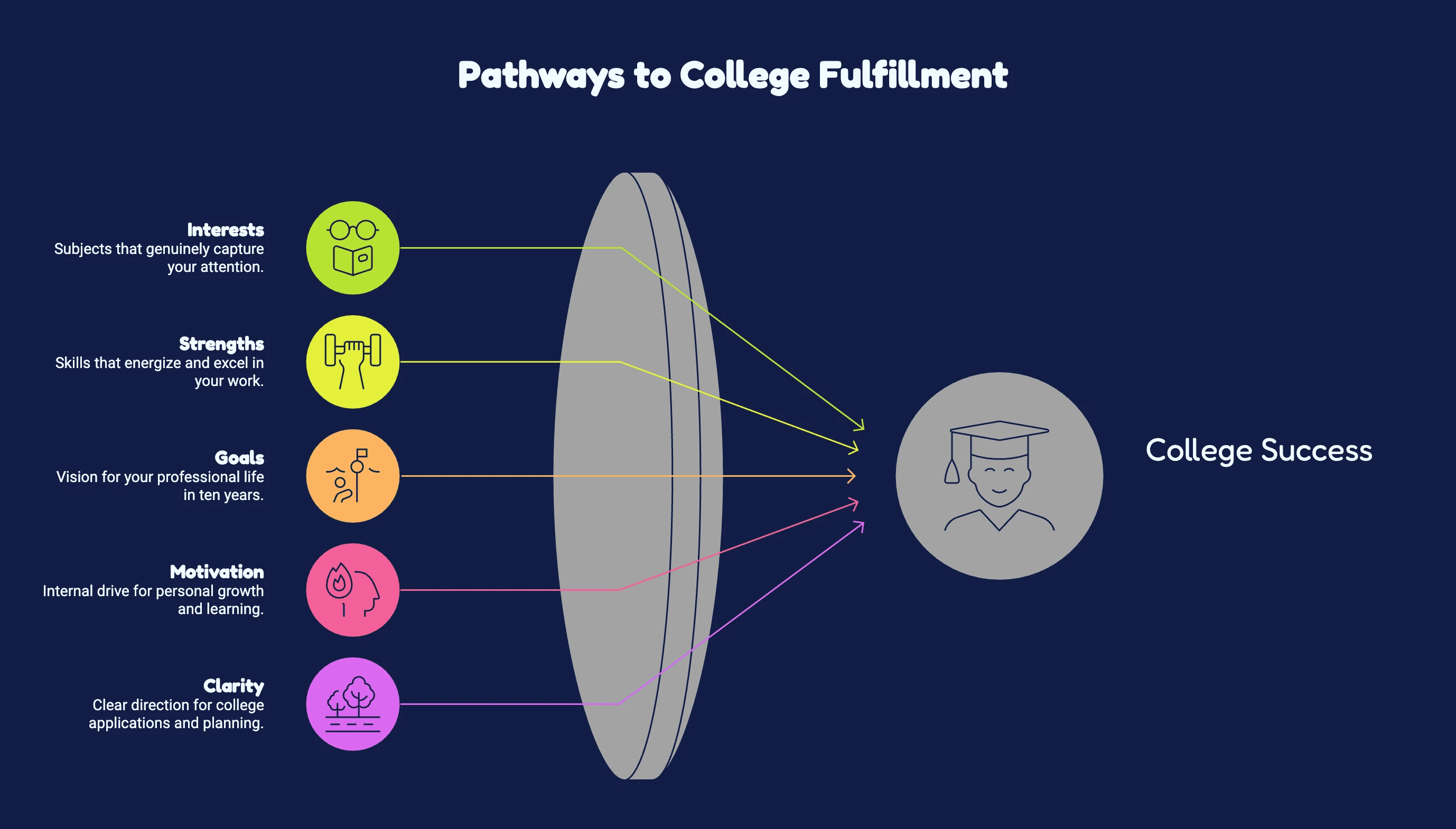
Before you research programs or compare schools, spend time with the questions that will drive every subsequent decision: What subjects genuinely hold your attention? What kinds of work do you find energizing rather than draining? What do you want your daily professional life to look like in ten years?
These are not easy questions, but they are the right starting point. Research from the LearningWell Coalition found that students motivated by personal growth engage most deeply in their college experience, with 71% participating in mentorships. Among students driven primarily by learning, 51% seek out mentoring relationships. Among those focused on identity development, 55% do. Students who connect their major to an internal motivation, rather than external pressure or what seems safe, show consistently higher engagement and personal fulfillment throughout college.
That internal motivation is also what holds up when the coursework gets hard. A student who chose a major because it seemed like a stable career path will grind through difficult material. A student who chose it because it connects to something they genuinely care about will push through the same material and look for more.
Identifying your interests and strengths early also makes every other part of the college application and planning process more coherent. NAT's guide on how to get into the Ivy Leagues covers how admissions officers read for exactly this kind of clarity, and why students who have a genuine direction tend to write stronger applications and essays than those who are still undecided.
Explore careers before you choose a degree path
Most students choose a major and then figure out what career it leads to. The stronger approach is to reverse the sequence: identify a career direction first, then find the degree path that leads there.
Start by researching careers that connect to your interests and strengths. Look beyond job titles. Examine what the daily work actually involves, what the work environment is like, what advancement looks like in that field over ten to twenty years, and what education the role typically requires. Many careers that sound similar on the surface lead to very different daily realities, and discovering that before you commit to a four-year program is far better than discovering it after.
Some fields have clearly defined educational pathways. Students pursuing speech-language pathology, for example, typically need graduate education and supervised clinical experience. The American Speech-Language-Hearing Association (ASHA) requires applicants to hold a qualifying graduate degree, complete accredited coursework, and fulfill supervised clinical practicum requirements. For students exploring this path, flexible options like an SLP online degree at DeSales University allow students to complete prerequisite coursework remotely, making it possible to balance existing commitments before beginning clinical practicums. Speech-language pathology consistently ranks among the most meaningful careers, with demand growing across school and healthcare settings.
The point of this research is not to lock in a career at 17. It is to test whether the field you think you want matches the reality of what people in that field actually do. A summer spent researching three careers in depth will give you more useful clarity than a month spent comparing program rankings.
Students who want structured help thinking through career direction alongside academic planning can schedule a free consultation with North American Tutors. NAT's Ivy League-educated tutors work with students on the full picture, from course selection to test prep to long-range planning.
Compare majors based on what they actually prepare you for
Once you have a career direction in mind, compare the majors that lead there based on what they genuinely teach, not what their names suggest.
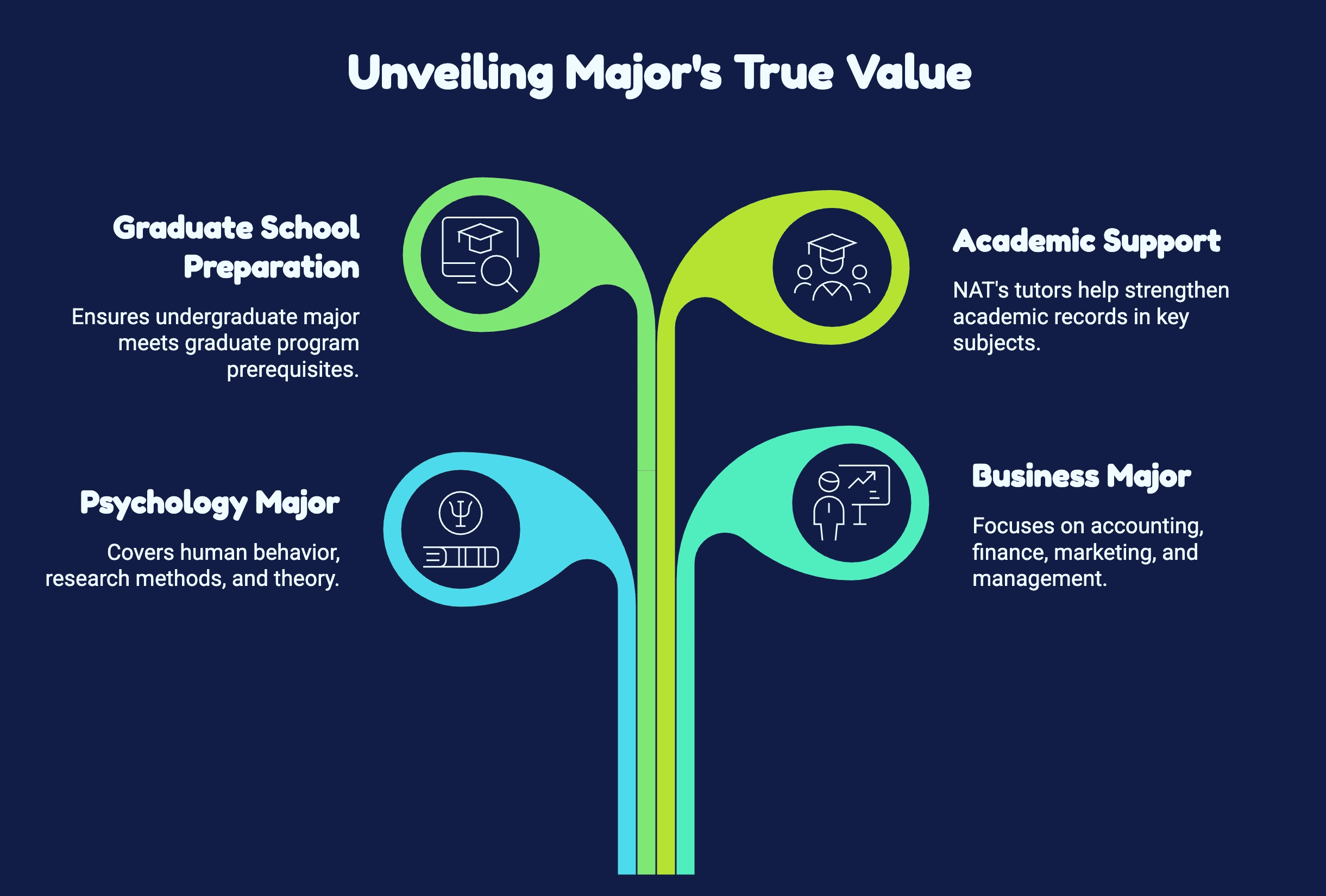
A psychology major typically covers human behavior, research methods, statistics, cognitive science, and developmental theory. A business major covers accounting, finance, marketing, economics, and organizational management. These are meaningfully different bodies of knowledge, even when students think both could lead to similar careers. The actual course requirements tell you far more about what you will spend four years doing than the major's name or reputation.
Review required courses, electives, and academic workload for each major you are considering. Ask yourself whether you can see yourself genuinely interested in the core courses, not just tolerating them. Also check prerequisite requirements, grading structures, and how much flexibility exists within the major to pursue specific concentrations or electives.
If you are considering graduate school, this comparison matters even more. Research which undergraduate majors typically meet the prerequisite requirements for your intended program. Some graduate programs are very specific: a clinical psychology doctoral program may expect a psychology major with research experience, while an MBA program may accept almost any undergraduate major. Knowing this before you choose your undergraduate path can save you significant time and cost later. For students considering healthcare-related graduate pathways, it is also worth understanding the financial commitment involved, including the costs associated with MCAT preparation and DNP programs, as outlined in our guide to MCAT and DNP program costs.
For students who need to strengthen their academic record in specific subjects that matter for their intended major, NAT's subject tutors work one-on-one across math, science, English, economics, and more at the high school level.
The major alignment test: four questions to ask before you commit
Most students choose a major by following one of three paths: they pick what their parents suggest, they pick what their friends are doing, or they pick what seems safe. None of those approaches produces the right answer reliably. Here is a four-question framework to get to a more grounded decision.
Question 1: Can you name three jobs in this field and describe what those people actually do on a Tuesday afternoon?
If you cannot, you do not yet know the field well enough to commit to a degree in it. Research the daily reality of careers this major leads to before you decide. Informational interviews with professionals, job shadowing, and reading field-specific publications all help close this gap.
Question 2: When you look at the required courses for this major, do you feel curious or relieved?
Curious means the material interests you. Relieved means you chose it because it seemed manageable. The courses that make you curious are the ones you will engage with deeply. The ones that only feel manageable are the ones you will tolerate. Four years is a long time to tolerate.
Question 3: Does your intended major connect to the college application and future plans you are building?
A student who says they want to study neuroscience, takes AP Biology and Chemistry seriously, pursues a research opportunity in 11th grade, and writes application essays about what specific questions in that field interest them has a coherent plan. A student whose stated major, academic choices, and activities point in different directions gives everyone, including themselves, less to work with. NAT's post on the 5 best extracurriculars for Ivy League admissionsshows how activities that connect to your intended major strengthen every part of your application.
Question 4: Have you tested this interest through experience, not just research?
Reading about a field is useful. Actually doing work related to it is the test that matters. An internship, a volunteer role, an independent project, or even a few conversations with people already working in the field can confirm or challenge what you think you want before you commit to a major and a degree.
Students who want help connecting their academic interests to a coherent college plan can work directly with NAT's college admissions and essay tutors, who guide students through both the strategic and written sides of the application process.
Research colleges and programs before committing
Once you have a direction, research the programs that deliver it. Do not rely on rankings alone. Rankings measure prestige, not fit. Two programs with the same name at different schools can differ substantially in curriculum, faculty research focus, internship connections, class size, and career outcomes.
Look at each program through its official website, information sessions, and conversations with current students and recent alumni. College admissions expert Lindsay Tanne Howe, in an interview with Town and Country, recommends visiting campuses and attending student events when possible. She also suggests speaking directly with current students and alumni for firsthand perspectives rather than relying on social media impressions, which can be useful for atmosphere but are not a substitute for personal research.
Check accreditation carefully, particularly in fields where it matters for licensing or graduate school eligibility. A program that is not accredited by the relevant professional body can create significant problems later, even if the school itself is well-regarded. For fields like education, healthcare, social work, and engineering, accreditation is not optional.
Also consider total cost: tuition, fees, housing, and the opportunity cost of your time. A program that costs significantly more than a comparable alternative and produces similar outcomes is rarely the better choice. Research financial aid options, merit scholarships, and employer assistance programs before making any final decisions.
For students who are building the academic record and test scores that expand their program options, NAT's college admissions tutors work with students at every stage of the preparation process.
Test your interests before committing
The best evidence that a major is the right fit is not a ranking or a salary figure. It is direct experience with the work the field involves.
Taking introductory electives, joining relevant clubs, volunteering, or pursuing an internship before or during college are all low-stakes ways to test whether genuine enthusiasm exists. The Conversation reported that interns were three times more likely to enroll in graduate school than non-interns. A Spanish study found that former interns were 6.5% more likely to secure employment after graduation. Internships test career interest and build professional opportunities at the same time.
If the experience confirms your interest, you have validated a real decision. If it reveals that the field is not what you expected, you have learned something valuable before investing four years and significant money in a degree that leads somewhere you did not actually want to go.
Give yourself room to reconsider
Choosing a major is not a permanent decision. It does not have to feel like one.
Most colleges allow students to change their major, and the process, while requiring some planning around credit requirements and academic timelines, is manageable when handled early. If your first choice does not feel right after a semester of real coursework, that is useful information. Acting on it in sophomore year is far less disruptive than waiting until junior year when more credits are locked into a direction you want to leave.
Use introductory courses, academic advising appointments, internships, and conversations with professionals in the field to check regularly whether your original direction still fits. Keep an eye on your college's specific requirements for switching programs: some departments have GPA thresholds or limited enrollment caps that make switching harder if you wait.
The goal is not to make the right choice on the first try. The goal is to build an education that reflects your actual strengths, genuine interests, and realistic goals, and to adjust that plan deliberately as you learn more about yourself and the fields you are considering.
NAT's do extracurriculars matter more than grades post is worth reading alongside this question: the activities and academic choices you make in high school often reveal interests and strengths that point toward the right major more clearly than any quiz or career survey.
Key statistics at a glance
Fact | Figure |
|---|---|
College students who switch majors at least once | 80% |
Students who change majors more than once | 10% |
Students motivated by personal growth who participate in mentorships | 71% |
Students motivated by learning who seek mentorship | 51% |
Students focused on identity development who seek mentorship | 55% |
Increased likelihood of graduate school enrollment among interns | 3 times |
Increased likelihood of employment among former interns (Spanish study) | 6.5% |
Choosing a college major is a significant decision, but it should not feel like a crisis. View your degree as a flexible foundation that supports your goals while leaving room for continued exploration. Exploring your options deliberately, rather than rushing toward a safe answer, builds the kind of confidence that makes the whole college journey feel purposeful rather than reactive.