
10th Grade Math Excellence: Mastering Geometry & Algebra II
Expert-led instruction tailored for the pivotal sophomore year. We bridge the gap between foundational arithmetic and advanced calculus preparation.
10th grade math tutor: one-on-one help for Algebra II, Geometry, and SAT Math
Tenth grade is where math splits students into two groups. One group moves through Algebra II and Geometry with some effort and comes out the other side ready for Pre-Calculus. The other group gets stuck, usually on one specific concept (quadratic functions, systems of equations, or geometric proofs), loses confidence, and spends the rest of high school playing catch-up.
The difference between those two groups almost never comes down to ability. It comes down to whether a student had someone explain the right concept at the right moment.
That's what a one-on-one 10th grade math tutor does. Not more worksheets. Not re-teaching the entire chapter. One session to identify exactly where the confusion is, and one targeted plan to fix it. 92% of NAT students improve by 90 or more SAT points or two letter grades.
If your child is struggling with 10th grade math, or wants to lock in the foundations they'll need for AP Calculus and SAT prep, schedule a free consultation to find the right tutor.
What math do 10th graders study?
In most U.S. high schools, 10th grade math covers one of two sequences: Algebra II, Geometry, or in some districts, an integrated math pathway that blends both. According to the Common Core State Standards, high school mathematics is organized into conceptual categories, not year-by-year courses, so the exact content varies by school and state. Most 10th graders encounter a mix of the following:
Students in honors tracks or accelerating toward AP classes often encounter this content at a faster pace with greater depth. NAT tutors work with students across every pace, from students who need to solidify the basics to those pushing toward perfect scores.
Why 10th grade math is harder than most students expect
Here's what happens in 10th grade that doesn't happen in 9th: the material stops being procedural and starts being conceptual.
In 9th grade, most students learned a formula, applied it, and got the right answer. In 10th grade, Algebra II asks students to understand why a quadratic has two solutions, or why a system of equations has no solution, or what a negative exponent actually represents. Geometry asks students to write formal proofs. Both require a shift from mechanical to logical thinking.
According to the National Council of Teachers of Mathematics (NCTM), the transition to abstract reasoning is the primary challenge in secondary mathematics. Students who haven't fully internalized algebraic reasoning in 9th grade find the pace of Algebra II overwhelming, not because they can't do the math, but because they're missing one foundational concept that keeps blocking them.
NAT tutors diagnose exactly which concept is creating the blockage. Most students who struggle with Algebra II are stuck on one of three things: function notation, factoring quadratics, or working with rational expressions. A session with a tutor who scored in the 99th percentile on the SAT and has worked with 490+ students usually finds the specific gap within the first 45 minutes.
Free consultation
We talk about your child's school, their specific curriculum, and what is going wrong. No sales pitch. Just a conversation to see if we are the right fit.
2
Tutor matching
We pair your child with a tutor who knows their exact textbook and course. For 10th grade, that means a tutor who can discuss Algebra II, Geometry, or Function at depth.
3
The 3-gap diagnostic
Session one is not a standard lesson. The tutor runs the Algebra II Cliff Diagnostic, a structured assessment that identifies which of the three most common 9th grade gaps is causing the problem.
4
Personalized sessions with progress reports.
Based on the diagnostic, the tutor builds a session-by-session plan. Your child gets bi-weekly progress updates. If the match is not right, we change it for free.
What a 10th grade math tutor works on
Algebra II
Algebra II is the most common source of struggle in 10th grade. The jump from linear equations to quadratics feels sudden for many students. NAT tutors cover:
Factoring quadratics, including trinomials with a leading coefficient greater than 1
Using the quadratic formula and interpreting the discriminant
Completing the square (both as a solving method and to identify vertex form)
Polynomial long division and synthetic division
Rational expressions: simplifying, multiplying, dividing, adding, subtracting
Radical expressions: simplifying, rationalizing denominators, solving radical equations
Systems of equations: substitution, elimination, and graphical interpretation
Exponential functions and logarithms (in schools that introduce these in 10th grade)
Each of these topics builds on the one before it. A student who is shaky on factoring will struggle with everything involving polynomials. A student who hasn't internalized function notation will get lost the moment transformations appear.
Geometry
Many students find Geometry more difficult than Algebra because it requires spatial reasoning and formal logical arguments simultaneously. NAT tutors address:
Triangle congruence (SSS, SAS, ASA, AAS, HL) and similarity (AA, SAS, SSS)
Two-column proofs and paragraph proofs: how to structure them, how to choose the right theorem
Coordinate geometry: distance, midpoint, slope, and equations of lines and circles
Circle theorems: arc length, sector area, chord relationships, tangent properties
Surface area and volume of 3D solids
Trigonometric ratios in right triangles (SOHCAHTOA)
Special right triangles: 30-60-90 and 45-45-90
The most common reason students fail Geometry proofs is they understand each theorem individually but don't know how to chain them together. That's a strategic problem, not a content problem, and it can be fixed in a few sessions.
Functions and graphing
Functions appear in Algebra II and run through Pre-Calculus and AP Calculus. Students who don't fully understand function notation, domain and range, and transformations in 10th grade carry that gap into college. NAT tutors work on:
Function notation and evaluating composite functions
Domain and range from graphs and from equations
Parent functions and transformations (horizontal/vertical shifts, reflections, stretches)
Inverse functions: finding them, verifying them, and graphing them
Piecewise functions and their applications
Trigonometry foundations
Most 10th graders are introduced to trigonometry through right triangles. NAT tutors build this foundation correctly the first time, so that when students encounter the unit circle and trig functions in Pre-Calculus, they're extending knowledge rather than relearning from scratch.
Meet NAT's grade 10 math tutors
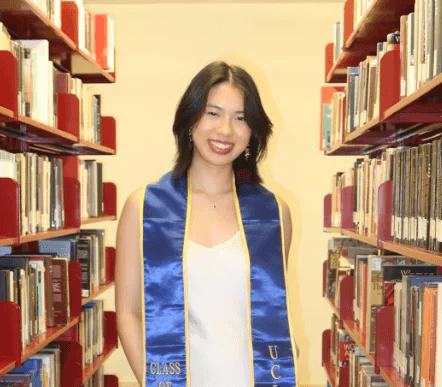
NAT's grade 10th math tutors come from institutions with rigorous math curricula. They did not pick up tutoring as a side interest. They studied mathematics, statistics, and other quantitative disciplines at the university level and built their teaching approach around substantive depth in the subject.


Explore all Math Tutors
Every tutor on our platform has been through a credential verification process. You can browse and filter by subject and grade level on the full tutors directory.
How 10th grade math connects to the SAT and ACT
Every parent of a 10th grader should know one thing: the math on the SAT is almost entirely 10th grade content.
The digital SAT, administered via the College Board's Bluebook app, tests four math domains. Three of them, Algebra, Advanced Math, and Geometry and Trigonometry, map directly to what students learn in 10th grade. According to College Board's official Digital SAT specifications, Advanced Math (which includes quadratics, polynomials, and functions) accounts for approximately 28% of all Math questions.
The ACT Math section, administered by ACT Inc., tests algebra, geometry, and trigonometry across 60 questions in 60 minutes. Students who have just completed a rigorous 10th grade Algebra II and Geometry sequence are in the strongest possible position for early SAT and PSAT practice.
Students who work with an NAT math tutor on their 10th grade coursework often find that SAT Math prep requires less dedicated time because the content is already locked in. The free SAT math formula sheet shows exactly which formulas the test expects you to know from memory, most of them are 10th grade content.
If your child is preparing for the PSAT in 10th grade, that test is explicitly designed to preview SAT-level skills. Strong 10th grade math performance directly raises PSAT scores, which matter for National Merit Scholarship consideration.
Kendra is a junior at the University of Chicago majoring in Statistics, completing the pre-med sequence, and bringing experience from high school math competitions including AMC/AIME. She dual-enrolled in Georgia Tech's math program in high school and has worked with 122+ students on everything from 10th grade Algebra II to advanced statistics. On the connection between 10th grade math and standardized test performance, she told the NAT team:
Math tutoring for every high school grade level
NAT provides grade-specific math tutoring that aligns with your child's school curriculum, whether they follow Common Core State Standards, state-specific standards, or an international program like IB. Our tutors know what the major courses in each year look like, what assessments matter, and which skills students should have mastered.
ONLINE MATH TUTORING BY GRADE
Personalized math support from Algebra I to Calculus
Ivy League tutors meet students where they are, then build the exact skills needed for the next course, exam, and confidence milestone.
9th Grade
Algebra I • Geometry
10th Grade
Geometry • Algebra II
Pre-Calculus • SAT Math
12th Grade
Calculus • Statistics
92% improve by 2+ grade letters
Ninth grade is usually Algebra I or Geometry, sometimes both. It's also where students form lasting impressions about whether math is something they can do. A strong 9th grade year sets the trajectory for everything that follows.
10th grade math
By 10th grade, most students are in Geometry or moving into Algebra II. Proof-based reasoning and abstract thinking land harder here than in any other year. Students who struggle in 10th grade math often have a Foundation Gap in their algebra, not a problem with geometry itself. The diagnostic finds it quickly.
Eleventh grade brings Pre-Calculus and, for many students, the SAT or ACT. It's a high-stakes year. NAT tutors can support both the curriculum and the test in the same programme.
Calculus, AP Statistics, and final standardized test attempts define senior year math for most students. Our tutors help students finish strong and build the quantitative foundation that rigorous college courses will demand from day one.
For the full roster of math tutors, visit the math tutors page.
What sets NAT's 10th grade math tutors apart
Every NAT tutor is a current student or graduate of an Ivy League or top-20 university. Harvard, MIT, Stanford, Princeton, Columbia, and Oxford are among the institutions represented on our platform. That's not just a credential. It's a filter that ensures your child is working with someone who understands advanced mathematics at a level far beyond what the 10th grade curriculum requires.
NAT's math tutors are especially well-suited for 10th grade because many of them tutored these exact courses while in high school or during college. They remember where the gaps tend to appear because they've seen them repeatedly in sessions.
What happens in a first session:
The tutor asks your child to walk through a recent test or assignment where they lost points
The tutor identifies which specific concept or step caused the error
The tutor explains that concept from the ground up, using a method that fits the student's learning style
The student works a similar problem independently while the tutor watches
The tutor builds a short-term plan (2-4 sessions) for closing the gap before the next test
No long-term contracts. No group sessions. Sessions are 60 minutes, one-on-one, online, and scheduled around your child's school calendar.
For high school tutoring pricing, sessions start at $50, and families can begin with a single trial session before committing to a package.
Jiayue teaches mathematics at the high school level, including Algebra II, AP Statistics, Calculus, and standardized test prep. He completed a teaching internship at Lake Braddock Secondary School and has tutored students through Mathnasium and privately. On what the first session with a struggling 10th grade student typically looks like:
10th grade math and the path to AP Calculus
Many parents of 10th graders are thinking about AP Calculus, even if the class is two years away. That's the right instinct. The path to AP Calculus AB or BC runs directly through 10th grade content.
Here's the typical sequence most high schools follow:
A student who graduates 10th grade with shaky quadratic functions, limited understanding of function transformations, or weak coordinate geometry will struggle in Pre-Calculus. A student who finishes the year with a solid foundation moves through Pre-Calculus faster and enters AP Calculus with less remediation.
NAT tutors who specialize in this sequence often start with 10th grade material and work forward, building the exact skills that Pre-Calculus teachers expect students to arrive with. The AP Calculus resource hub shows the kind of work students do at the end of this path, which gives families a concrete goal to work toward.
Online math tutoring vs. in-person: what actually works better for 10th graders
Most families asking "math tutoring near me" are still thinking about in-person sessions. That's understandable. But the math hasn't supported in-person over online for individual academic tutoring in quite some time.
A 2020 study published in the Journal of Educational Psychology found that online one-on-one tutoring produces equivalent or superior outcomes compared to in-person tutoring when the student and tutor can interact in real time with shared visual tools.
For 10th grade math specifically, online tutoring has practical advantages:
NAT's platform is entirely online. Sessions use video, screen sharing, and a shared digital whiteboard. Students work through problems in real time, not by watching the tutor solve them. Tutors can annotate, graph, and build worked examples live during the session.
The one situation where in-person tutoring has an edge is with younger students who struggle to stay focused on a screen. For most 10th graders, that is not a significant barrier.
The 3-error pattern NAT math tutors see in most struggling 10th graders
After reviewing session notes across 330+ students in 10th grade math, NAT tutors have identified a consistent pattern. Students who are struggling in Algebra II or Geometry almost always show at least two of these three errors in their first session:
Error 1: Sign errors when distributing or factoring
The student knows the factoring method, but distributes a negative across parentheses incorrectly. For example, simplifying -(x - 3) as -x - 3 instead of -x + 3. This single error generates cascading mistakes across an entire problem set, and because the student's process is correct, they often don't realize the error is conceptual rather than careless.
Error 2: Confusing a function's value with its input
When asked to evaluate f(g(x)), the student substitutes incorrectly because they're treating f and g as variables rather than operations. This appears in composite functions, inverse function problems, and every transformation question on the SAT. It's not a computation error. It's a notation error that reveals a misunderstanding of what a function is.
Error 3: Proving by example rather than by logic in Geometry
The student shows that a theorem holds for one triangle and considers the problem solved. This is the most common reason students fail to write valid proofs. Teaching a student that geometry proofs require universally valid logical steps, not demonstrations, typically takes one focused session once the specific misunderstanding is identified.
Each of these errors is fixable in one to three sessions when a tutor can see the student's actual work, not just their final answer.
Isaiah has over 9 years of tutoring experience in math, science, computer science, and SAT/ACT prep. He studied Computer Science at Harvey Mudd College, one of the most mathematically demanding undergraduate programs in the country. On the most common mistake he sees in 10th grade math:
Preparing for the SAT and ACT with a 10th grade math foundation
10th grade is also the year many students take the PSAT and when families start thinking seriously about the SAT and ACT timeline. The math foundation built in 10th grade directly affects every standardized test score.
The digital SAT has 44 Math questions across two adaptive modules. The ACT has 60 Math questions in 60 minutes. Both tests draw heavily on content that appears in 10th grade coursework.
For students who want to start SAT Math prep while reinforcing their 10th grade curriculum, there's genuine overlap. The SAT vs. ACT comparison guide helps families decide which test to prioritize. The digital SAT score calculatortranslates a current practice score into a target gap.
As practical study resources, the SAT math formula sheet and the ACT math formula sheet both show exactly which formulas appear on each test. Most of them are 10th grade content.
Students targeting top colleges should know that the Ivy League SAT score requirements consistently sit at 1500 or above, which requires a near-perfect SAT Math performance. A student with a strong 10th grade math foundation has more time to build their test-taking strategy on top of the content they already know, rather than learning both content and strategy simultaneously under time pressure.

FAQ’s
Frequently Asked Questions
Start with a free consultation
If your child is in 10th grade and struggling with Algebra II, Geometry, or the concepts that the SAT will test next year, the first step is simple. NAT offers a free, no-obligation consultation where we learn about your child's current courses, recent test results, and upcoming goals, and identify which tutor is the best fit.
No scripts. No sales pitch. Just a real conversation about whether we're the right fit.
Browse our 10th grade math tutors, including Kendra (University of Chicago), Isaiah (Harvey Mudd, 9+ years experience), Jiayue (Cornell), and Jonathan (Swarthmore). Each tutor profile shows their academic background, the subjects they teach, and what students say about working with them.
"Your grades are now our responsibility."