
Grade 9 Chemistry Tutors Matched to Student's Actual Course
North American Tutors matches Grade 9 students with private chemistry tutors who studied chemistry, chemical engineering, or biochemistry at top-20 universities. Sessions are live, one to one, and online, built around the student's real course, whether that is Ontario's SNC1W, an NGSS physical science unit, IGCSE Chemistry, or MYP Year 4.
The tutors we assign to Grade 9 Chemistry
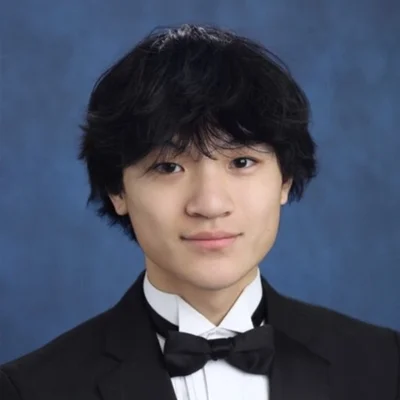
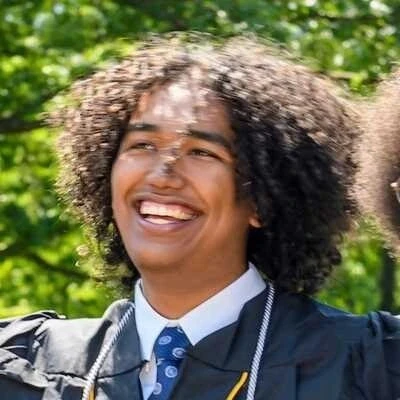
Grade 9 chemistry work goes to tutors who teach the foundations well, not to the ones who specialize in organic mechanisms. Each of the three below has a public profile page and a chemistry or chemical engineering background. Jiayue Liu supported AP Chemistry instruction and labs at a secondary school before he tutored the subject privately.

What is Grade 9 chemistry, and why does it look different at every school?
Grade 9 chemistry is rarely a course with chemistry in its name, which is the first thing that makes it hard to shop for. In Ontario it is Strand C of SNC1W, where chemistry sits alongside biology, physics, and earth and space science. That strand covers the structure of the atom, physical and chemical properties, the organisation of the periodic table, Bohr-Rutherford diagrams, and solutions.
In a US school on an NGSS-aligned sequence, chemistry usually appears as a matter-and-interactions unit inside an integrated physical science course. On the Cambridge pathway a student is in the first year of IGCSE Chemistry. In an IB school it is MYP Year 4 sciences.
The units differ and the vocabulary differs, but the failure points do not. Grade 9 is where four things appear for the first time and where almost all the lost marks come from:
Balancing equations, where students guess and check instead of using a method
The mole concept, which is the first genuinely abstract idea in school science
Unit conversion and significant figures, which is arithmetic wearing a chemistry costume
Lab write-ups, where the reasoning earns the marks rather than the result
A tutor who identifies which of those four is failing can move a grade in a term. One who reteaches the whole unit usually cannot.
A short call, no pressure.
You tell us the course name or code, the board, the last two grades, and what the teacher has said. If you do not know the course code, a photo of the syllabus or a recent test is usually enough for us to work it out.
2
A $50 introductory session.
You tell us the course name or code, the board, the last two grades, and what the teacher has said. If you do not know the course code, a photo of the syllabus or a recent test is usually enough for us to work it out.
3
A plan you can see.
The student meets the matched tutor for an hour. The tutor works real problems from the current unit and identifies which of the four Grade 9 failure points is costing marks. It is a working session, not a sales call.
4
Sessions, reports, and a tutor you can change.
You receive a plan built around the student's actual upcoming tests and assignment deadlines, not a generic syllabus. Ongoing sessions run at $59 to $61 each inside a package.
Why Grade 9 chemistry decides what a student can take later
Most parents book chemistry help because of a grade. The reason worth booking it is a sequence. College Board states that AP Chemistry expects students to have completed an introductory high school chemistry course and Algebra II. The Grade 9 or Grade 10 chemistry year is that introductory course.
If the mole concept and stoichiometry never landed, the student either does not get into AP Chemistry or gets in and struggles from Unit 1.
The same is true of the IB and Cambridge pathways. A student who wants Chemistry HL in the Diploma programme or IGCSE Chemistry at a strong grade is building toward it from MYP Year 4 onward. Streamed systems make this even more direct, because the Grade 9 science result often decides which Grade 10 and 11 courses are available at all.
None of that means a rough first term is a catastrophe. It means the fix is cheaper now than it will be in Grade 11. A student who spends six weeks properly learning to balance equations and convert units at 14 is buying back a year of difficulty at 16. That is the honest case for tutoring at this stage, and it is a different case from the one made for exam prep.
What Grade 9 chemistry tutoring includes
What a Grade 9 chemistry session actually looks like
Sessions are one hour, live, and one to one over video with a shared whiteboard. There are no group classes and no recorded lessons. The whiteboard does real work in chemistry, because Bohr-Rutherford diagrams, balanced equations, and dimensional-analysis chains have to be drawn and checked step by step rather than described.
The student needs a device with a camera, their course materials, a calculator, and paper. Watching a student set up a unit conversion is how a tutor finds the error, and that is not visible in a finished answer.
Most Grade 9 families start with one session a week and move to two in the weeks before a unit test. Everything runs online, so a student in Vancouver, Toronto, Los Angeles, Dubai, or Singapore draws from the same roster, and time zones are matched at booking. NAT has offices in Vancouver and Beverly Hills, but no tutoring is delivered in person at either address.
How to choose a Grade 9 chemistry tutor
Six things are worth checking before you pay anyone, including us. Two are criteria NAT does not automatically win on.
Do they ask which course, not just which subject? A tutor who cannot name the board or course code by the end of the first call will teach a generic syllabus. Ask directly and watch what happens.
Can you verify who they are? Look for a full name, a named institution, and a profile you can open. A first name and a star rating is not a credential.
Did they study chemistry, or just pass it? A general STEM tutor who stopped at introductory chemistry can usually handle Grade 9 content. They often teach the mole as a formula rather than an idea, though, and that gap surfaces in Grade 11. Ask which chemistry courses the tutor completed and at what level.
Have they taught the level, not just the subject? Lab instruction and teaching assistant work matter more at Grade 9 than a high test score does. Fourteen year olds need someone who has explained a first principle before, not someone who found it easy.
Are they a certified classroom teacher, and do you need one? NAT does not win here. Our tutors are current university students and recent graduates in chemistry and engineering, not licensed teachers. Some services staff instead with certified teachers holding education degrees. If your student has an IEP or needs formal accommodation, a licensed teacher is very likely the better choice.
Do you need on-demand help at 11pm? Also not us. NAT runs scheduled sessions with a consistent tutor. For quick homework questions at unpredictable hours, an on-demand service fits that pattern better.
Who Grade 9 chemistry tutoring is right for
This fits a student who:
Did well in Grade 8 science and started slipping when equations and the mole appeared
Can describe a reaction in words but cannot balance or quantify it
Is in a streamed system where the Grade 9 result decides later course access
Is aiming at AP Chemistry or Chemistry HL and wants the foundation solid first
This does not fit, and here is where to go instead:
The real problem is the math. If a student sets the chemistry up correctly and then loses marks on unit conversion or rearranging a formula, chemistry hours are the wrong purchase. Start with a Grade 9 math tutor
The course is integrated science and the trouble is in the biology unit. That goes to the biology roster.
The trouble is in the physics unit. Same idea, different roster. Start with the physics tutors.
The student is already in AP Chemistry or IB Diploma Chemistry. Different course, different tutors. Free study material sits on the AP Chemistry resource hub.
You need a licensed teacher for accommodation reasons. Covered above. We are not that.
What we can show you, and what we cannot
Every tutor named on this page has a profile you can open right now. Jiayue Liu is reading Chemical Engineering at Cornell and scored 1560 on the SAT with a perfect 800 in Math. He supported AP Chemistry instruction and labs at Lake Braddock Secondary School. Riya Arul studies Molecular and Cell Biology at UC Berkeley and works as a Senior Research Assistant at UCSF's Bhattacharya Lab.
Osiris Peralta holds a Chemical and Biomolecular Engineering degree from Johns Hopkins and works as an Environmental Engineer for the New York City Department of Environmental Protection. Those are checkable claims, which is the point of publishing them rather than describing the team in adjectives.
One honest limit: NAT publishes degrees, employers, and test scores for its tutors, but does not publish a years-of-experience figure on every profile. Where no number exists, this page does not invent one.
What we do not have is a chemistry-specific case study or a rating on a public review platform, so neither appears here. The published student case studies are real and worth reading, but they concentrate on test prep rather than Grade 9 coursework.

FAQ’s