
11th grade chemistry tutor: Equilibrium, Thermodynamics, and AP Chemistry reasoning
North American Tutors matches your junior with a chemistry tutor who has taken this material two levels past where they are, one-on-one and online. Our roster includes a Brown medical student with a 524 MCAT, a Duke chemistry major who scored 5 in AP Chemistry, and a chemical engineer with ten years of tutoring. A person makes the match.
Meet your Grade 11 chemistry tutors
A directory shows you a gallery and assigns you somebody else. These three are the people who would actually teach the sessions, and the reason they are on a grade 11 page rather than a grade 9 one is that all three have used this material well past the point where a syllabus stops.
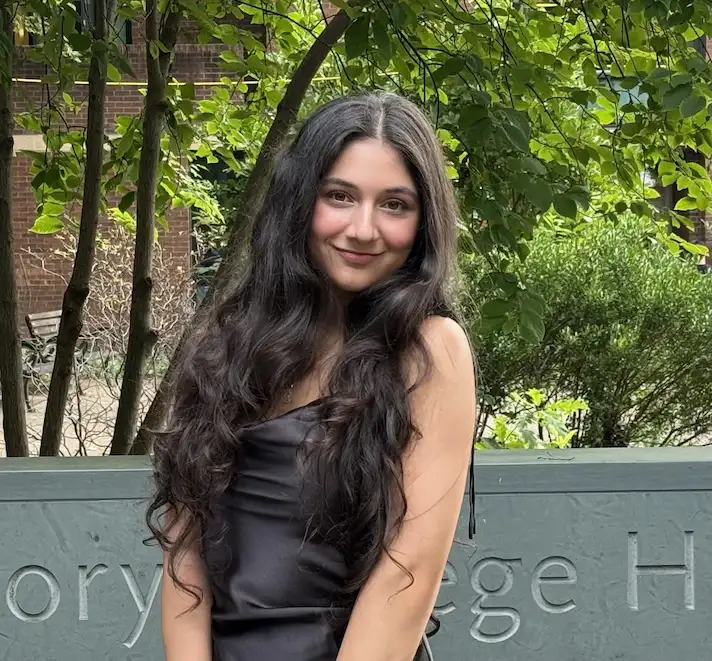


Every tutor on our platform has been through a credential verification process. You can browse and filter by subject and grade level on the full tutors directory.
The year chemistry stops being calculable
Grade 10 chemistry punishes students who cannot calculate. Grade 11 punishes students who can only calculate.
The shift arrives with equilibrium. Up to that point, a chemistry question has an answer you work toward: balance it, convert it, solve it. Equilibrium asks which direction a system will move and why, and then asks the student to justify it. Thermodynamics asks whether a reaction will happen at all, which is a stranger question than it sounds. Electrochemistry asks a student to track electrons through a system they cannot picture.
None of that is harder arithmetic. It is a different kind of thinking, and the students who struggle most are frequently the ones who did well in grade 10 by being fast and procedural. They keep applying the method that worked, it stops working, and everybody involved concludes they have hit their ceiling in science.
They have not. The course changed what it is testing and nobody announced it.
What an 11th grade chemistry tutor actually works on
Sessions follow the student's own course and assessment calendar, whether that is honors chemistry, AP Chemistry, IB, or Ontario's SCH3U. Across most grade 11 courses that means:
Kinetics. Rate laws, reaction mechanisms, and the difference between what a rate law says and what a mechanism proposes, which is where a lot of marks quietly go.
Equilibrium. ICE tables, the equilibrium constant, and Le Chatelier reasoning. This is the unit that decides the year, and it is the one most students meet with a grade 10 method that cannot handle it.
Acids, bases, and titration. pH, buffers, and titration curves, where reading the graph is worth as many marks as the calculation.
Thermochemistry and thermodynamics. Enthalpy, entropy, and Gibbs free energy, and the shift from "what is the answer" to "will this happen".
Electrochemistry. Cell potentials and redox, which our hardest AP Chemistry units guide names alongside equilibrium and thermodynamics as one of the three that break students.
Reaction chemistry carried forward from grade 10, because the chemical reactions material is assumed rather than retaught, and a gap there surfaces as an equilibrium problem.
Free-response technique. Showing reasoning, justifying a claim with evidence, and writing an answer that earns the method marks even when the number is wrong.
Lab work and error analysis. Experimental design, propagation of error, and conclusions that refer to the data actually collected.
What sits outside the scope: producing a lab write-up, working a take-home assessment, and running a science fair project. A tutor will teach the chemistry a lab is built to demonstrate, and will argue with a student about whether a conclusion is actually supported. Finished work handed over is a different transaction entirely, and it is worth nothing to a student sitting an exam alone in May.
Alexander Beji Joseph graduated summa cum laude in Biochemistry, scored 1600 on the SAT and 524 on the MCAT, and is now in his second year at Brown's medical school while working in its Cardiothoracic Surgery Lab. He has tutored for more than six years and describes his own approach as frameworks-first. That makes him a useful person on the question grade 11 actually turns on, which is what to do when memorising stops working.
You tell us the course, the grade, and the plan.
Not "chemistry help", but "AP Chemistry, the equilibrium test came back at 62, the exam is in May and she wants to apply for engineering." In junior year the plan matters as much as the mark, because it changes what a tutor should prioritise.
2
A person picks the tutor.
Grade 11 chemistry splits between students who need the grade 10 foundation rebuilt and students who need reasoning technique for free-response questions. Those are different tutors.
3
The $50 diagnostic hour.
Sixty minutes spent finding out whether the problem is foundation, reasoning, or exam technique. It ends with a written plan and a feedback summary.
4
Personalized sessions with progress reports.
Based on the diagnostic, the tutor builds a session-by-session plan. Your child gets bi-weekly progress updates. If the match is not right, we change it for free.
What sessions actually look like
Sessions run 60 minutes, online, one student and one tutor, built around a shared whiteboard. Grade 11 chemistry needs that whiteboard constantly: ICE tables, titration curves, energy diagrams, and cell schematics all have to be built line by line while the student watches, then rebuilt by the student while the tutor stays quiet.
Three things are needed from you, and none takes long to find: the course or textbook name, the two most recent marked assessments, and the dates of the next two. In junior year, add the intended exam date if there is one.
The marked papers do the diagnostic work. In grade 11 specifically, a tutor is reading for whether marks are being lost on the chemistry, on the reasoning, or on the writing, because free-response questions award method marks that students routinely fail to claim.
Homework between sessions is narrow on purpose. Four equilibrium problems worked slowly with the reasoning written out will move a grade further than thirty questions answered quickly, which mostly rehearse the habit that is causing the problem.
Where a student is carrying two sciences, one tutor can often hold both. Several people on the biology tutor roster also teach chemistry, and at this level the overlap is real rather than nominal.
Why grade 11 chemistry rewards reasoning over recall
Worth understanding before you buy any tutoring, because it determines what good tutoring even looks like this year.
State science frameworks describe the grade 11 content in terms that are explicitly about explanation rather than calculation: refining a chemical system by specifying a condition change that increases product at equilibrium, and explaining how temperature or concentration changes affect reaction rate. Those are the matter and its interactions standards most states build the year around, and the verbs in them are construct, explain, and refine rather than solve.
AP Chemistry assesses the same way. A large share of free-response marks are for justification, and a student who writes the right number with no reasoning loses most of them while feeling they answered correctly. That gap between feeling right and scoring well is the most common thing a grade 11 parent describes without having a name for it.
The practical consequence is that speed is not the lever this year. A student who has been rewarded for being fast since grade 9 has to be taught to slow down and say what is happening before writing, which is uncomfortable and takes a few weeks to feel normal.
It also transfers, and junior year is when that stops being theoretical. The reasoning-from-data habit is exactly what the ACT science section tests, and the ACT tutor roster is staffed by people who scored 34 to 36 on it themselves.
The SAT has no science section but rewards the same disciplined reading of a figure before the answer options. Most families start one-to-one SAT preparation in exactly this year, which is why grade 11 chemistry and test prep end up competing for the same evenings.
If the PSAT in October is being taken seriously for National Merit, that lands in the same term as the equilibrium unit, which is worth knowing when you plan the year. And if the test choice is still open, our SAT and ACT comparison sets out the real differences rather than the marketing ones.
What 11th grade chemistry tutoring costs
The first session costs $50 for a full hour, and it is a diagnostic rather than a sales call. After that the published high school rates are package based: 15 lessons at $915, which is $61 a lesson, or 20 lessons at $1,180, which is $59 a lesson. Upgrade within 48 hours of the diagnostic and the $50 is credited toward the package.
Package length is the only thing that moves the number. AP Chemistry does not cost more than honors chemistry, a more credentialed tutor does not cost more than a less credentialed one, and a student running chemistry and maths together pays the same per lesson as one running chemistry alone.
Worth knowing what you are comparing against, because this category hides price harder than most. Of the five competitors examined for this page, four publish no rate anywhere on the relevant page and the fifth shows only per-tutor rates on a marketplace where the tutor you see is not the tutor you get. Marketplace listings start around $20 an hour with no published screening standard. Those are different products and the table below sets out how.
How to choose an 11th grade chemistry tutor
Six checks worth running on anyone this year, us included. Junior year has less room for a bad choice than any other.
Is the person you are shown the person who teaches? On a marketplace, usually not. You browse a gallery and get assigned somebody. Ask directly, and ask before you pay.
Did the tutor take this material past where your child is? Grade 11 chemistry is taught badly by anyone who learned it exactly once. A tutor who has done university chemistry, an MCAT, or industry work has seen equilibrium from the other side and teaches it differently.
Will they diagnose before they teach? The right opening question is whether marks are being lost on foundation, on reasoning, or on written justification. A tutor who begins by re-explaining the unit has skipped the only step that matters.
Can they handle free-response technique, not just chemistry? A large share of AP and honors marks are for justification. Ask how they teach a student to claim method marks.
How fast can they start, and does it matter? A marketplace tutor starts tonight; a vetted match takes a few days. With an exam eight weeks out, that difference is real and worth weighing honestly.
Do they hold a teaching qualification? The tutors here are subject specialists with strong university records rather than licensed classroom teachers. For a student with an IEP or a diagnosed learning difference, a provider staffed by certified teachers is usually the better choice, and that is what we will say on the first call.
Numbers 5 and 6 are the two where a competitor frequently comes out ahead of us. Including them is the point: a checklist written so one provider passes every item is marketing, not a checklist.
Owen Emmons reads Chemistry at Duke with an environment concentration, scored 1580 on the SAT and a 5 in AP Chemistry along with nine other AP exams, and works in Duke's Welsher Lab on high-speed microscopy. He grew up in a small rural town without access to tutoring and taught himself most of it, which is the background he credits for understanding where students actually get stuck rather than where a syllabus assumes they will.
Should your junior take AP Chemistry?
This is the actual question most families arrive with, and the marketplaces that dominate these results never answer it.
The College Board recommends high school chemistry and Algebra II as prerequisites, and the course runs nine units ending in thermodynamics and electrochemistry. Those last three units are the ones that decide scores, and every one of them assumes the grade 10 foundation is automatic rather than recallable.
The honest test is not whether your child is bright. It is whether stoichiometry and mole conversions are currently effortless. If they still require thought, AP Chemistry will consume the year, because the course does not pause to rebuild that and the student will be learning two things at once under exam pressure.
Before paying anyone, exhaust the free material, because in this subject it is genuinely good. The AP Chemistry resource hub indexes cheat sheets for all nine units plus a formula sheet, none of it behind a signup, and the stoichiometry guide is the fastest way to find out whether the foundation is genuinely solid. If it is not, that is useful information in September and painful information in March.
When self-study is not enough, NAT's AP tutoring covers every AP subject on the roster, and several chemistry tutors teach AP Biology or AP Physics alongside it, which matters for students carrying two AP sciences. For juniors already committed to medicine, the MCAT program is staffed by tutors who came through this exact sequence, including one on this page. That is worth knowing now only because it shows the path is continuous: the reasoning habit built in the equilibrium unit is the one being used on that exam.
Grade 11 chemistry help, five options compared
Two of those are free and one of them is very good at explaining chemistry. If your child understands the reasoning and needs a topic re-explained, use the video and keep your money. Pay when nobody can tell you why the marks are being lost.
Who this is right for, and who it is not
A good fit when:
The grade slipped at equilibrium, thermodynamics, or electrochemistry
The student gets the chemistry right and loses marks on written justification
AP Chemistry is being taken now, or being decided on for next year
Grade 10 chemistry was scraped rather than held, and it is showing
Junior year matters for a science or engineering application and the transcript needs to hold
The family wants the tutor named, with a checkable credential, before paying
Not a good fit when:
The AP exam is three weeks away and nothing has been started. Equilibrium and thermodynamics cannot be rebuilt in three weeks, and anyone who says otherwise is selling.
The student needs formal accommodation or an IEP-aligned approach. A certified teacher service is the better call.
Free video would fix it, because the student has the reasoning and needs one topic re-explained.
The student has not agreed to it. In junior year, tutoring a student who does not want it fails faster than at any other age.
Where grade 11 chemistry sits in the four-year science sequence
Junior year is the one colleges read most closely, and chemistry is usually the hardest course on that transcript. It also sits at the point where the science sequence stops being a ladder and starts being a set of choices.
What came before it
Almost everything in grade 11 assumes grade 10 held. Equilibrium assumes stoichiometry is automatic; thermochemistry assumes the mole is not still being thought about. Students who came through 10th grade chemistry solidly have a hard year. Students who scraped it have an impossible one, and the fix is almost always to go back rather than push forward.
Where the foundation goes back further than that, 9th grade chemistry is where atomic structure and bonding were first taught, and a bonding gap shows up years later as an inability to predict anything.
The other input is quantitative. 10th grade math built the rearrangement fluency that equilibrium problems assume, and a student shaky there will read an ICE table as chemistry they cannot do.
Energy is the other inheritance. Students who took 10th grade physics have already met energy as a bookkeeping system, which makes thermodynamics land considerably better.
If sophomore year was broadly difficult rather than specifically so, the grade 10 program is a better starting point than any single course page, and it covers the grade 10 electives and humanities too.
What is running alongside it this year
Junior year has no slack in it, and that is the real constraint on any tutoring plan.
Most students carrying chemistry are also in 11th grade math, usually pre-calculus, at exactly the moment formal test prep starts. A smaller and more stretched group adds 11th grade physics or 11th grade biology, and the students taking two AP sciences at once are the ones most likely to need help with sequencing rather than content.
Outside the sciences, the full grade 11 subject list covers English, history, languages, and computer science. When several subjects are slipping at once in junior year the problem is almost never any one course, and the grade 11 hub is the right starting point.
What it decides for grade 12 and beyond
Two things, and they are different in kind.
The first is course access. A strong grade 11 chemistry result opens 12th grade chemistry at AP or post-AP level, which matters for students applying to science and engineering programs. It also shapes whether 12th grade biology is realistic at AP level, since AP Biology leans on chemistry from its opening unit.
The second is the transcript itself. Junior year grades are the last full year most colleges see before they decide, which is why a chemistry grade in grade 11 carries weight a grade 10 chemistry grade never did.
Students continuing on a science path usually run 12th grade physics or a second AP science alongside it, with 12th grade math at calculus level underneath both.
The grade 12 hub covers senior year, including the electives and humanities that decide how much time is left for the sciences. The whole four-year path sits on the high school tutoring hub.
For families with a younger sibling, the sequence starts at grade 9, which is the year the quantitative habits are either built or missed.
That is mostly a maths question. 9th grade math is where the rearrangement fluency starts, and 9th grade physics is where unit tracking becomes a graded skill rather than a nicety. The grade 9 electives round out that year.
What we can show you, and what we cannot
The evidence and its limits, stated together. Every tutor named here has a profile you can open right now, and the credentials are checkable in a few minutes: a 524 MCAT and published co-authorship from a Brown medical student, a Duke chemistry major with a 5 in AP Chemistry and nine other 5s, and a chemical engineer with six years in industry and ten years of tutoring.
Beyond the individuals, North American Tutors publishes service-wide numbers: 59,950+ lessons, 4,950+ students, 30+ countries, and 92 percent of students gaining two or more letter grades or 90 or more SAT points.
That 92 percent figure comes with no cohort size, no measurement window, and no stated method. Treat it as what it is, a number the company publishes about itself, and weigh it against the tutor credentials above, which you can verify independently.
Two absences are worth naming. There is no chemistry case study: the published student case studies are real and detailed and every one is SAT, ACT, or MCAT. And there is no third-party review rating anywhere on this site, while the marketplaces competing for this query carry per-tutor review counts running into the hundreds. That is a real disadvantage and no stars appear on this page because of it. When a grade 11 chemistry result is documented properly, with permission, it will be published here.

FAQ’s