
12th grade biology tutor: AP and IB Biology through the exam
North American Tutors matches your senior with a biology tutor who has already taken this material into medicine or research. The roster includes a Fulbright Scholar currently interviewing at medical schools, a UPenn pre-med with four years of AP tutoring, and a Dartmouth biology major who scored 5 in AP Biology. A person makes the match, and the person named is the one who teaches.
Meet your Grade 12 biology tutors
One competitor on this results page advertises that only three percent of applicants pass its screening, and then names not a single tutor. That is a claim you cannot check. Here are three people you can, each of whom has carried this material past the exam into research or medicine, which is the only qualification that matters for a senior.
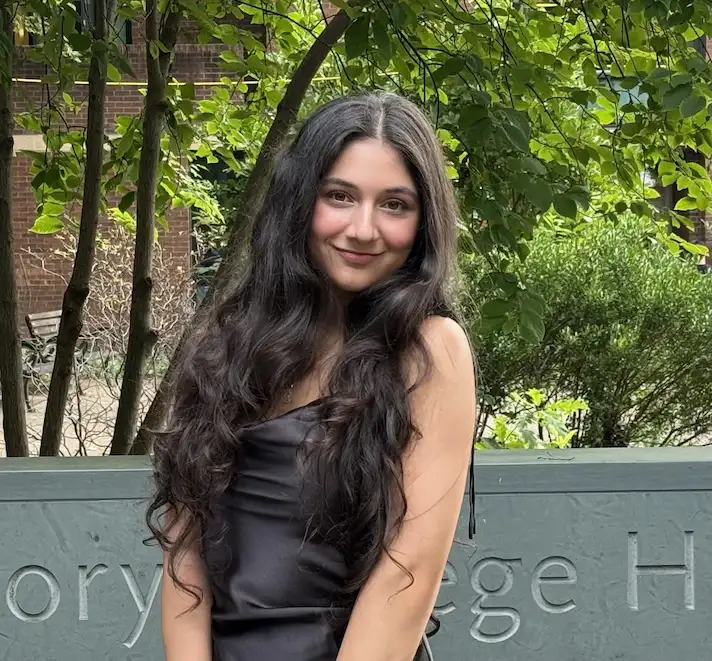
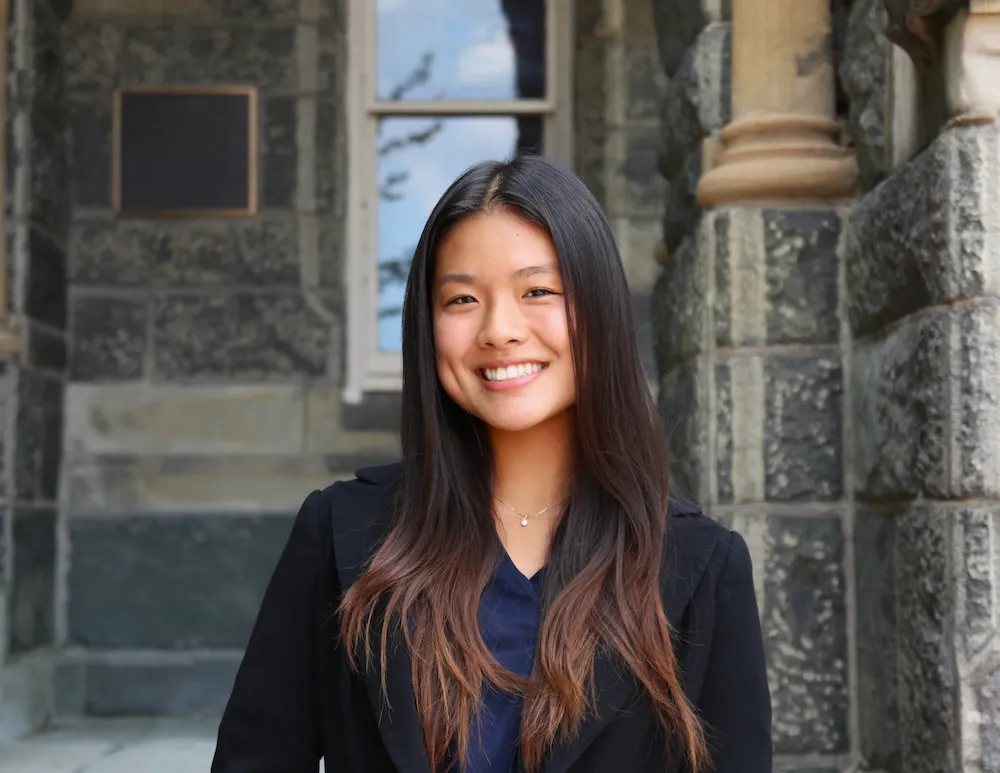
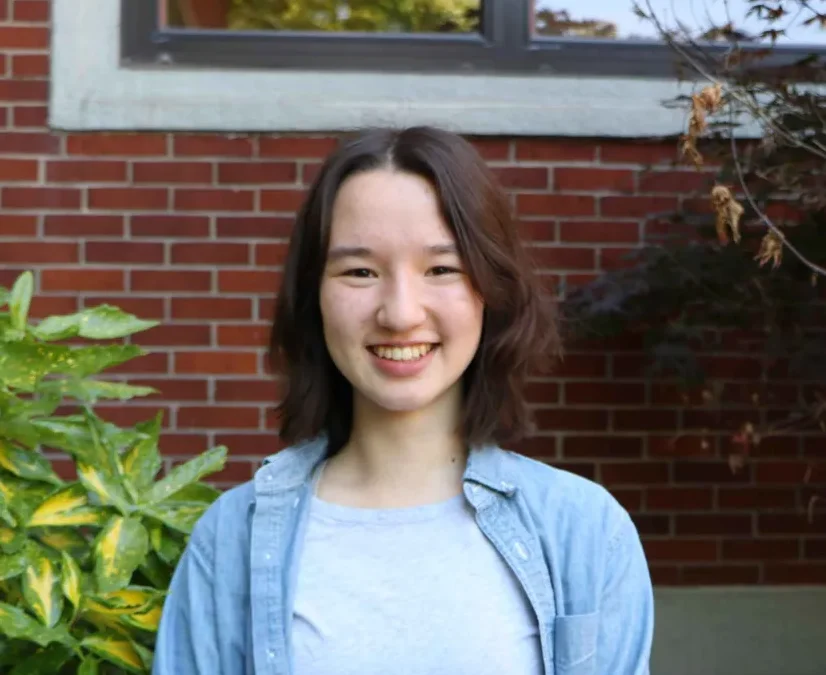
Every tutor on our platform has been through a credential verification process. You can browse and filter by subject and grade level on the full tutors directory.
The year with two jobs that pull against each other
Grade 12 biology is asked to do two things at once, and almost nobody separates them before spending money.
The first is protecting a grade. Final semester marks and predicted grades feed college offers, and for students holding a conditional offer the biology result is not a line on a transcript, it is a condition. That is a deadline problem, measured in weeks, and the work is triage: highest-yield units, exam technique, and marks the student is closest to already earning.
The second is arriving in a first-year biology course able to keep up. University biology assumes the AP or IB material is fluent, not survived, and a student who scraped grade 12 spends first year rebuilding while also meeting new content. That is a depth problem, measured in months.
A tutor who optimises for the deadline shortchanges the foundation. A tutor who optimises for the foundation may miss the deadline. Which one you are buying should be decided in the first hour, deliberately, rather than discovered in April.
What a 12th grade biology tutor actually works on
Sessions follow the student's own course and calendar, whether that is AP Biology, IB Biology at standard or higher level, an honors or post-AP course, anatomy and physiology, or Ontario's SBI4U.
For AP Biology, the College Board recommends prior courses in both biology and chemistry, and the exam covers eight units from the chemistry of life through ecology. The work that moves a score at this stage is rarely more content:
Free-response technique. Structuring a justification, claiming method marks, and answering the question asked rather than the one revised for.
Data and experimental design. Controls, variables, error bars, chi-square, and Hardy-Weinberg. The AP Biology labs guide covers the thirteen investigations and the statistical skills that recur across them.
Targeted content repair, aimed at the units a marked script shows are actually weak, using the free unit sheets such as the gene expression cheat sheet rather than a full re-teach.
For IB Biology the shape is different and worth stating plainly, because most tutoring pages list IB and explain nothing. Standard level runs a minimum of 150 teaching hours and higher level 240, with the same core syllabus and a difference of breadth and depth rather than kind. The internal assessment, a single individual investigation, is worth 20 percent of the final grade, and the three written papers carry the other 80 percent with data-based and extended-response questions throughout. That 20 percent is where a well-supported student gains most, because it is the only part of the grade that is not written under time pressure.
What sits outside the scope: writing an internal assessment, drafting a lab report, or working a take-home assessment alongside a student. What a tutor does instead is teach the biology an investigation is built to demonstrate, then interrogate whether the conclusion actually follows. Drafting any part of the document would put the student's diploma at risk under academic honesty rules, so nobody here touches it.
Leah Chen holds a Georgetown degree and is completing a Master's in Public Health at Vrije Universiteit Amsterdam as a US Fulbright Scholar. She spent three years running physics laboratory sessions as a Georgetown teaching assistant, has two publications with a third manuscript pending, and did four years of wet lab nanoparticle research. She is in the medical school interview cycle now, which makes her unusually well placed on the question seniors actually have, which is whether any of this matters after the exam.
What sessions actually look like
An hour, online, one tutor and one student, with a shared whiteboard open throughout. At senior level much of that hour goes on documents rather than diagrams: a released free-response question, a marked script read for what the student wrote rather than what they answered, or an internal assessment draft picked apart for whether its conclusion follows from its data.
Three things are needed from you: the course or textbook name, the two most recent marked assessments, and every fixed date that matters, which at this stage means exam dates, internal assessment deadlines, and any offer conditions.
Those marked papers carry most of the diagnostic weight. In senior biology a tutor is usually separating a student who does not know the content from one who knows it and cannot demonstrate it under time pressure, and the second is far more common and far faster to fix.
Homework between sessions stays small and specific. Two released questions attempted properly beat a chapter reread, which mostly rehearses whatever habit is causing the problem.
Where biology and chemistry are tangled, one tutor can often hold both. Several people on the chemistry tutor roster also teach AP Biology, and in the biochemistry units the overlap is real rather than nominal.
When a college offer depends on the final grade
This is the situation nothing else on this results page addresses, and it changes the maths of the decision entirely.
For most of high school, a biology grade is one input among many. In senior year it can become a condition: an offer contingent on final grades, a predicted grade a university is holding you to, or an AP or IB result that arrives after the offer letter and can still unwind it. Families in that position are not shopping for enrichment. They are managing a risk with a fixed date on it.
Three things follow, and they are worth knowing before you buy anything.
Timing beats intensity. Six weeks of weekly work will do more than a fortnight of daily sessions, because technique has to be practised across assessments rather than crammed before one. If the date is genuinely close, the honest plan is triage on the highest-yield units and exam writing, not coverage.
Technique moves faster than content. A student losing marks on justification rather than knowledge can often recover them inside two or three attempts, because the marks were already nearly earned. A student missing three units cannot, and pretending otherwise is how families waste a term.
Some situations are not recoverable, and you should be told. If the exam is three weeks out and the foundation is not there, no provider can fix it, and any who says otherwise is selling. We will tell you that in the diagnostic hour, and the $50 is what it costs to find out.
Plenty of seniors are still sitting standardised tests alongside all this, and both the SAT and the ACT run into the autumn of senior year.
One-to-one help for either runs through the SAT tutor roster or the ACT tutor roster, and where a student is deciding which one to retake, our SAT and ACT comparison sets out the real trade-offs.
For students already looking past the degree, the MCAT program is staffed by tutors who came through this exact sequence, including one named on this page.
You tell us the course, the grade, and the plan.
Not "biology help", but "IB Biology HL, predicted a 5, the offer needs a 6, internal assessment due in three weeks." In senior year the deadline is the plan.
2
A person picks the tutor.
Grade 12 splits between deadline triage and foundation building, and those need different people. You get a name and a profile link before anything is booked, and the person named is the person who teaches, which is the standard the whole tutor directory runs on.
3
The $50 diagnostic hour.
Sixty minutes establishing which of the two jobs in Block 5 you are actually buying, and whether the timeline supports it. If it does not, we will say so in that hour rather than after four sessions.
4
Personalized sessions with progress reports.
Based on the diagnostic, the tutor builds a session-by-session plan. Your child gets bi-weekly progress updates. If the match is not right, we change it for free.
How to choose a 12th grade biology tutor
Six things to establish before paying anyone in senior year, us included. The first one is the question almost nobody thinks to ask.
Will they tell you if it is too late? The most useful thing a senior-year provider can say is that the timeline does not support the goal. A provider that never says it either has never met that situation or is not being straight with you.
Can you see who will teach, before you pay? A screening percentage is not a credential. A named person with a profile you can open is. Ask for the name.
Have they carried this material past the exam? Senior biology is taught differently by someone who went on to use it. A tutor who last saw AP Biology as a student is working from memory of a syllabus.
Can they teach exam writing, not just biology? At this stage most recoverable marks are in justification and structure. Ask specifically how they work on a free-response answer.
How fast can they start, and what does speed cost? A marketplace tutor starts tonight at a fifth of the price. With a deadline in weeks that is a real trade-off and deserves an honest weighing, not a dismissal.
Do they hold a teaching qualification? The tutors here are subject specialists and researchers rather than licensed classroom teachers. For a student with an IEP or a diagnosed learning difference, a provider staffed by certified teachers is usually the better choice, and that is what we will say on the first call.
Numbers 5 and 6 are the two we lose on regularly. A checklist that a single provider happens to pass in full is an advertisement wearing a checklist's clothes, and you would be right to discount the other four.
Ariya Patel studies Neuroscience and Bioengineering at the University of Pennsylvania on a pre-med track with a Wharton minor in Business Psychology, and has spent four years tutoring privately across AP Biology, AP Chemistry, and AP Calculus. She has worked as a research assistant and a medical scribe, and served as a Marks Writing Fellow at Penn. Four years is long enough to have seen the senior-year panic pattern repeatedly, which is what makes her useful on the question of what to actually do about it.
What 12th grade biology tutoring costs
One hour, $50, spent diagnosing rather than selling. The published high school rates beyond that are package based. Fifteen lessons cost $915, which works out at $61 each, and twenty cost $1,180, or $59 each. Upgrade within 48 hours of the diagnostic and the $50 comes off the package.
Package length is the only variable. AP and IB do not cost more than a standard course, and a more credentialed tutor does not cost more than a less credentialed one.
Worth knowing what the market looks like at this level, because it is not what most people expect. Four of the five competitors examined for this page publish no rate at all. The one that does charges $948 to $1,579 for twelve hours, which works out between $79 and $132 an hour, and names not one of its tutors. That is roughly double to triple what is quoted above, from a provider whose screening claim is a percentage rather than a person.
Marketplaces sit at the other end, advertising from around $15 to $20 an hour with no published screening standard and no guarantee about who turns up. Both ends are legitimate purchases for some situations. The table below sets out which.
AP or IB, and what the exam actually rewards
By senior year the course is chosen, so the useful question is no longer which one but what each actually marks.
AP Biology is a single exam at a fixed date, covering eight units, and the College Board recommends prior biology and chemistry as preparation. Almost all of the recoverable marks late in the year sit in free-response writing and data questions rather than in content recall. Start with the free material before paying for anything: the AP Biology resource hub indexes cheat sheets for all eight units plus a formula sheet, none of it behind a signup.
If the biochemistry units are where it falls apart, the problem is usually chemistry rather than biology, and the AP Chemistry resource hub covers that ground from the other direction.
IB Biology distributes the grade differently, and that distribution is the strategic fact of senior year. The internal assessment is a single individual investigation worth 20 percent of the final grade, and it is the only part not written under time pressure. Standard level runs a minimum of 150 teaching hours against 240 at higher level, sharing a core syllabus with a difference of breadth and depth. The three written papers carry the remaining 80 percent, with data-based and extended-response questions throughout.
For an IB student, the practical implication is that time spent on the internal assessment early is worth more per hour than the same time spent revising in April. A tutor cannot write it, and should refuse to, but can argue about whether the research question is answerable and whether the conclusion follows from the data.
When self-study stops being enough, NAT's AP tutoring covers every AP subject on the roster, and several biology tutors here teach AP Chemistry alongside it.
Grade 12 biology help, five options compared
Two of those cost nothing and one costs a fifth of what we charge. If your senior needs a topic re-explained, the free video is better value than any tutor including ours. Pay when the question is what is still achievable and nobody has given you a straight answer.
Who this is right for, and who it is not
A good fit when:
A final grade or predicted grade is attached to a college offer
The student knows the biology and the exam score does not show it
An IB internal assessment is coming and the research question is not settled
Senior biology is the foundation for a life sciences or pre-med degree next year
Biology and chemistry are tangled in the biochemistry units
The family wants a named, checkable tutor rather than a screening statistic
Not a good fit when:
The exam is three weeks away and three units are missing. Technique can be sharpened that fast; a foundation cannot.
The student needs formal accommodation or an IEP-aligned approach.
One topic needs re-explaining. Free video does that better and costs nothing.
What is wanted is help producing an internal assessment or lab report. That is an academic honesty problem and no tutor here will touch it.
The student has not agreed to it. In senior year that fails faster than at any other age.
What we can show you, and what we cannot
The evidence and its limits together, which is the opposite of how this category usually works.
Every tutor named here has a profile you can open now, and the credentials are checkable in a few minutes: a Fulbright Scholar with three publications and four years of wet lab research who is currently interviewing at medical schools, a UPenn pre-med with four years of AP tutoring and a writing fellowship, and a Dartmouth biology major with a 5 in AP Biology who works in a university chemistry lab. No screening percentage is offered anywhere on this page, because a percentage is a claim about people you are not allowed to see.
Company-level figures also exist and should carry less weight than any of that. North American Tutors publishes a lesson count above 59,950, a student count above 4,950 across more than 30 countries, and a claim that 92 percent of students gain two or more letter grades or 90 or more SAT points. That 92 percent comes with no cohort size, no measurement window, and no stated method, which makes it a self-published aggregate rather than evidence.
Two absences worth naming. There is no biology case study: the published student case studies are real and detailed and every one is SAT, ACT, or MCAT. And there is no third-party review rating on this site, while several competitors carry public per-tutor review counts. That is a genuine disadvantage and it is why no stars appear here. AP and IB results are published numbers, so senior year is the easiest place on the site to document an outcome properly. Once one exists and permission is granted, it will be published on this page.
Where grade 12 biology sits at the end of the sequence
This is the last science course most students take before somebody else assumes they know it. That changes what a weak grade costs.
What it is built on
Senior biology assumes three earlier years held, and gaps in any of them surface here as something that looks like a biology problem.
Content-wise, the foundation is 11th grade biology, where data interpretation and free-response reasoning were supposed to become habits, and 10th grade biology, where genetics and cellular energetics were first taught properly. Further back, 9th grade biology is where cell structure and the scientific method began.
Chemistry is the second assumption and the one families most often miss. The biochemistry units in any senior biology course lean on it directly, so a student who found 11th grade chemistry hard, or who never solidified 10th grade chemistry, often struggles here for reasons that are not biological at all.
The third is quantitative. Chi-square, Hardy-Weinberg, and error analysis all assume the algebra built in 10th grade math, and students who took 10th grade physics have been graded on reading a graph since sophomore year. Where several of these are shaky at once, the grade 11 program is a more honest starting point than another biology package.
What is running alongside it this year
Senior year is not short of content, it is short of attention. Applications, deadlines, and interviews sit on top of a full timetable, and the failure mode is almost never the biology.
Most students taking senior biology also carry 12th grade math at calculus or statistics level, and the science-bound often add 12th grade chemistry or 12th grade physics as well.
The rest of the load is real too. The full grade 12 subject list covers English, computer science, social sciences, and the college essay work that eats autumn. When several things wobble at once the grade 12 hub is the better starting point than any one subject.
What comes after it
Nothing else in high school, which is the point.
For a life sciences or pre-med student, the next biology course is at university, taught faster, assessed harder, and assuming this year was fluent. That is why the depth question in Block 5 is worth answering honestly rather than optimistically.
The whole four-year path is mapped on the high school tutoring hub, which is the right link for a family planning the sequence rather than rescuing the end of it.
For a younger sibling still in it, that sequence starts at grade 9. Two courses there build what senior biology later takes for granted: 9th grade chemistry for the biochemistry, and 9th grade math for the statistics.
The grade 9 electives fill in the rest of that year, and the grade 10 program covers the one after it, including its other subjects.

FAQ’s