
11th grade biology tutor: AP Biology data analysis and free-response reasoning
North American Tutors matches your junior with a biology tutor who does laboratory analysis for a living, one-on-one and online. The roster includes a UC Berkeley molecular and cell biology major running research at UCSF, a Northwestern neuroscience honors graduate starting a PhD, and a Princeton student whose own research was presented at a global health symposium. A person makes the match. The first 60 minute session is $50.
Meet your Grade 11 biology tutors
Biology is the subject where a high test score is least predictive of good tutoring, because the AP exam does not test what a fast learner is fast at. These three were picked because all of them analyse real data as part of their actual work. That is the skill the exam is built around, and it is much harder to fake than content knowledge.


Every tutor on our platform has been through a credential verification process. You can browse and filter by subject and grade level on the full tutors directory.
Why strong students get 3s on AP Biology
The most common story in grade 11 biology is a student who knows the content, revises hard, and scores well below what everyone expected.
It happens because AP Biology is not a recall exam. The content is broad and mostly shallow, and the exam knows students can look it up. What it actually tests is whether a student can read an unfamiliar experiment, work out what was controlled and why, interpret a graph they have never seen, run a chi-square, and then write a justification connecting the evidence to a claim in a way a marker can follow.
None of that is practised by re-reading notes. It is practised by attempting hard data questions badly, repeatedly, with someone reading the working.
So the student revises more, scores the same, and concludes they are bad at biology. They are usually good at biology and untrained at the exam, and those need completely different work.
What an 11th grade biology tutor actually works on
Sessions follow the student's own course and assessment calendar, whether that is AP Biology, honors biology, IB Biology, or Ontario's SBI3U. Across most grade 11 courses that means:
Cell communication, signalling, and the cell cycle. Feedback loops and cascades, where the marks are for explaining a mechanism rather than naming its parts.
Heredity beyond Punnett squares. Linkage, chi-square analysis, and pedigrees with incomplete information. Our free heredity cheat sheet covers the chi-square work specifically, which is the calculation most juniors meet unprepared.
Gene expression and regulation. Operons, regulation, and biotechnology, which the gene expression cheat sheet sets out unit by unit.
Natural selection and evolution, including Hardy-Weinberg, where the algebra is trivial and the interpretation is not.
Ecology and population dynamics. Carrying capacity, energy flow, and the mathematical representations that state frameworks explicitly require students to use here rather than merely describe.
Experimental design and data analysis. Controls, variables, error bars, standard error, and deciding whether a difference in a graph is real. This is the highest-yield work on the list and the least taught.
Free-response technique. Structuring a justification, claiming method marks, and answering the question actually asked rather than the one revised for.
Laboratory work. The AP Biology labs guide covers the thirteen investigations and the statistical skills that recur across them.
What sits outside the scope: writing a lab report, working a take-home assessment alongside a student, or running a science fair project. A tutor will teach the biology an investigation demonstrates and argue about whether a conclusion is supported. Producing the document is a different transaction and worth nothing to a student sitting an exam alone in May.
Riya Arul reads Molecular and Cell Biology at UC Berkeley and works as a Senior Research Assistant at UCSF's Bhattacharya Lab on pulmonary fibrosis, where she trains other researchers in PCR and genetic construct design and analyses single-cell RNA sequencing data in R. She has co-authored published work. That is an unusual vantage point on the question grade 11 turns on, which is why knowing the biology stops being enough.
Riya Arul, Molecular and Cell Biology, UC Berkeley
Why AP Biology is a data exam, not a memory exam
Worth understanding before buying any tutoring, because it determines what good tutoring even looks like this year.
The signal is visible in the standards themselves. State science frameworks describe grade 11 ecology content in terms of using mathematical and computational representations to support explanations about carrying capacity, biodiversity, and the flow of energy through an ecosystem. The verbs are use, support, and revise rather than describe or list. That framing runs through the whole year.
AP Biology assesses the same way. The exam sets unfamiliar experiments and asks students to identify controls, interpret unfamiliar graphs, apply statistics, and justify a claim with evidence. A student can know every unit and still lose most of the free-response marks by writing a correct conclusion without the reasoning that earns them.
That has a practical consequence for how you spend money. Content tutoring, which is what most providers sell, is the wrong purchase for the majority of grade 11 biology students. The right purchase is somebody who will sit with a marked script and a released question and work on the gap between knowing and demonstrating.
It also transfers, and junior year is when that becomes urgent. The reasoning-from-data habit is precisely what the ACT science section tests, and the ACT tutor roster is staffed by people who scored 34 to 36 on it.
The SAT carries no science section at all, but its figures and data questions reward the identical instinct to read the graph before reading the options.
Most families begin one-to-one SAT preparation in this exact year. That is why AP Biology and test prep end up fighting over the same Tuesday evenings, and why planning the year beats reacting to it.
If the PSAT in October is being taken seriously for National Merit, that lands in the same term as the genetics unit. And if the test choice is still open, our SAT and ACT comparison sets out the real differences, which matter more than usual for a student who is already good at reading data.
What 11th grade biology tutoring costs, and the $20 question
One hour, $50, and it is spent diagnosing rather than selling. Beyond that, the published high school rates work on packages: $915 buys 15 lessons at $61 each, and $1,180 buys 20 at $59 each. Upgrade within 48 hours of the diagnostic and the $50 is credited toward the package.
Package length is the only variable. AP Biology does not cost more than honors biology, and a more credentialed tutor does not cost more than a less credentialed one.
Now the question that actually gets asked. At least one online provider publishes AP Biology tutoring at $20 an hour, and marketplaces advertise from around $15. Those are real prices and pretending otherwise would be insulting.
What $20 an hour buys is an hour of someone's time, usually unscreened, usually unnamed until after you pay, and usually a generalist covering many subjects. For re-explaining a topic the student already half knows, that can be perfectly adequate and it is genuinely cheaper. What it does not reliably buy is somebody who can look at a marked free-response script and tell you which of three different problems your child has, because that requires having done the analysis rather than the revision. Whether that difference is worth roughly three times the hourly rate depends entirely on which problem you have, which is what the first hour is for.
How to choose an 11th grade biology tutor
Six questions to put to any provider, this one included. The first is the one almost nobody asks and it is the most predictive.
Does the tutor work with real data? This is the single most predictive question for AP Biology and almost nobody asks it. A tutor who runs lab analysis, statistics, or research reads an unfamiliar graph the way the exam wants it read. A tutor who scored well on the exam once may not.
Is the person you are shown the person who teaches? On a marketplace, usually not. Ask directly, before paying.
Will they read the marked script, not just the topic list? The useful diagnosis is whether marks are lost on content, on data, or on written justification. A tutor who opens by re-teaching the unit has skipped the only step that matters.
Can they teach free-response technique specifically? Ask how they get a student to claim method marks. If the answer is vague, they teach content and you are buying the wrong thing.
How fast can they start, and does it matter? A marketplace tutor starts tonight for a fifth of the price; a vetted match takes a few days. With an exam ten weeks out, weigh that honestly.
Do they hold a teaching qualification? The tutors here are subject specialists and researchers rather than licensed classroom teachers. For a student with an IEP or a diagnosed learning difference, a provider staffed by certified teachers is usually the better choice, and that is what we will say on the first call.
On numbers 5 and 6, another provider is often the better answer. Leaving them off would make this a sales page rather than a checklist, and you would rightly stop trusting the other four.
Tutor insight
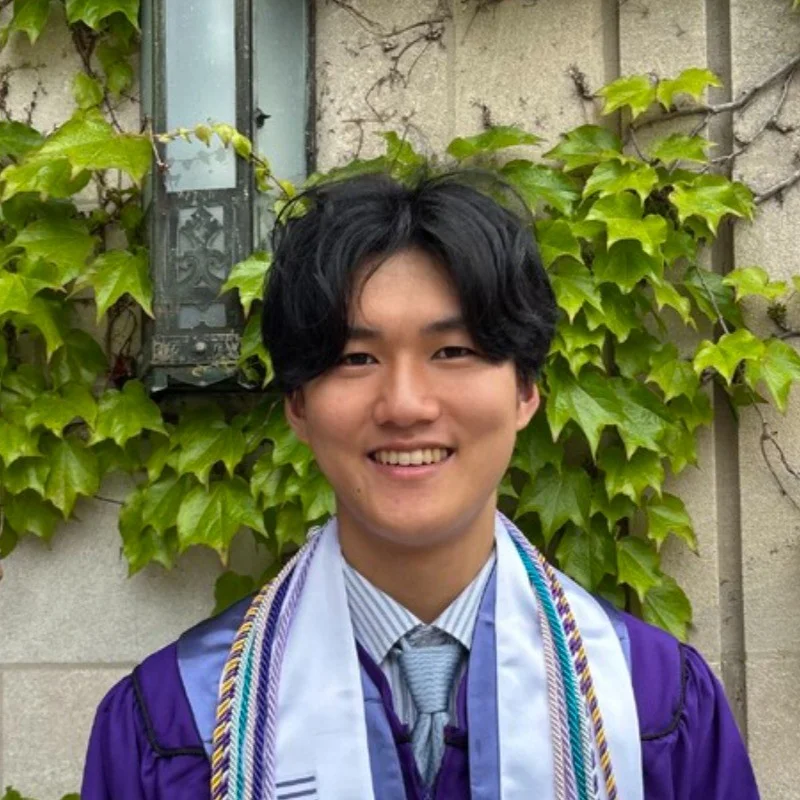
Uju Kim graduated from Northwestern with an honors degree in Neuroscience and a Computer Science minor, scored 1590 on the SAT and 35 on the ACT, and begins a Neuroscience PhD there studying how the hippocampus encodes abstract relationships. Four years of tutoring, a completed honors thesis, multiple research grants, and Phi Beta Kappa sit behind a stated philosophy built on student agency, which is a specific thing to claim on a page like this and worth testing against.
You tell us the course, the grade, and the plan.
Not "biology help", but "AP Biology, the genetics unit came back at 71, the exam is in May and he is applying for a life sciences programme." In junior year the plan changes what a tutor should prioritise as much as the mark does.
2
A person picks the tutor.
Grade 11 biology splits between students who need content rebuilt and students who need data and free-response technique. Those are different people. You get a name and a profile link before anything is booked, and the person named is the person who teaches, which is the standard the whole tutor directory runs on.
3
The $50 diagnostic hour.
Sixty minutes finding out whether the marks are being lost on content, on data interpretation, or on written justification. A returned paper shows the mark, not the pattern, which is why this hour exists.
4
Personalized sessions with progress reports.
Based on the diagnostic, the tutor builds a session-by-session plan. Your child gets bi-weekly progress updates. If the match is not right, we change it for free.
Should your junior take AP Biology?
The question most families arrive with, and none of the competitors in these results answers it.
The College Board recommends high school courses in both biology and chemistry as preparation, and the course runs eight units from the chemistry of life through to ecology. That chemistry prerequisite is the one families overlook, and it is the most common reason a capable student struggles in the opening months rather than in the hard units later.
The honest test has two parts. Is the biology foundation solid enough that new content lands rather than displaces old content? And has chemistry been done, not merely started? A student sitting AP Biology concurrently with a first chemistry course is carrying a genuine handicap through the first three units, and it is better to know that in September.
Exhaust the free material first, because in this subject it is unusually good and it costs nothing. The AP Biology resource hub indexes cheat sheets for all eight units plus a formula sheet, none of it behind a signup, and the chemistry of life cheat sheet is the fastest way to find out whether the chemistry prerequisite is genuinely in place.
If it is not, the AP Chemistry resource hub covers the same ground from the other direction, and several biology tutors here teach both.
When self-study stops being enough, NAT's AP tutoring covers every AP subject on the roster. For juniors already committed to medicine, the MCAT program is staffed by tutors who came up through this exact sequence. That is worth knowing now for one reason: the data-reasoning habit built in the ecology unit is the same one that exam is testing in six years, which is a better argument for doing it properly than any grade is.
Grade 11 biology help, five options compared
Two of those are free and one costs a third of what we charge. If your child needs content re-explained, the free video is genuinely better value than any tutor including ours. Pay when the problem is that a correct answer keeps scoring badly.
Who this is right for, and who it is not
A good fit when:
The student knows the biology and the score does not show it
Free-response marks are being lost on justification rather than content
Data questions, chi-square, or Hardy-Weinberg are where the paper falls apart
AP Biology is being taken now, or decided on for next year
Grade 10 biology or chemistry was scraped rather than held
The family wants a named, checkable tutor before paying
Not a good fit when:
The AP exam is three weeks away and nothing has been started. Technique can be sharpened in three weeks; a foundation cannot be rebuilt.
The student needs formal accommodation or an IEP-aligned approach.
The problem is one topic they need re-explained. Free video does that better and costs nothing.
The student has not agreed to it. In junior year that fails faster than at any other age.
What we can show you, and what we cannot
The evidence and its limits together. Every tutor named here has a profile you can open now, and the credentials are checkable in a few minutes: a molecular and cell biology major running research at UCSF who trains other researchers in PCR, a Northwestern honors neuroscience graduate starting a PhD with Phi Beta Kappa and multiple research grants, and a Princeton student who presented AP Research work at a global health symposium.
There are also company-level figures, and they should be read differently. North American Tutors publishes 59,950+ lessons, 4,950+ students across 30+ countries, and 92 percent of students gaining two or more letter grades or 90 or more SAT points.
No cohort size accompanies that 92 percent, no measurement window, and no method. A self-published aggregate is a much weaker kind of evidence than a profile page you can open and check, and it deserves proportionally less weight in your decision.
Two absences worth naming. There is no biology case study, because the published student case studies are all SAT, ACT, or MCAT. And there is no third-party review rating anywhere on this site, while several competitors carry public ratings or review counts. That is a real disadvantage and it is why no stars appear on this page. AP Biology scores are published numbers, so grade 11 is the easiest year to produce a documented outcome. When one exists, with permission, it goes here.
Where grade 11 biology sits in the four-year science sequence
Junior year is the last full transcript most colleges read, and for students heading toward medicine, biology, or environmental science it is also the year the subject stops being introductory.
What came before it
Grade 11 biology assumes two things, and one of them is not biology.
The first is a working biology foundation. Students who came through 10th grade biology with genetics and cell energetics properly understood have room to work on technique. Students who memorised their way through it are learning content and method simultaneously, which is the hardest position to be in. Where the gap goes back further, 9th grade biology is where cell structure and the scientific method were first taught.
The second is chemistry, and it catches families out every year. The College Board recommends a chemistry course as preparation for AP Biology, and the opening units on the chemistry of life and cellular energetics are where a chemistry gap surfaces immediately. Students who found 10th grade chemistry difficult tend to struggle here for reasons that have nothing to do with biology, and 11th grade chemistry running concurrently does not solve it fast enough to help.
Quantitative habits matter too. 10th grade math built the algebra that Hardy-Weinberg and chi-square work assume, and students who took 10th grade physics have already been graded on reading a graph properly. If sophomore year was broadly hard rather than specifically hard, the grade 10 program is the better place to start.
What is running alongside it this year
Junior year has no slack, and that constrains any tutoring plan more than the content does.
Most students taking biology are also in 11th grade math, usually pre-calculus, exactly when formal test prep begins. A smaller and more stretched group adds 11th grade physics, and students carrying two AP sciences need help with sequencing before they need help with content.
The non-science load matters too, and juniors carry a lot of it. The full grade 11 subject list sets out what else is running, from English and history through to computer science.
When three or four subjects wobble at once, treating it as a biology problem wastes money. The grade 11 hub is the honest starting point for that conversation.
What it decides for grade 12 and beyond
For a science-bound student, more than any other year.
A strong grade 11 biology result opens 12th grade biology at AP or post-AP level, and it is the course a medicine or life sciences application is read against. Students continuing on that path usually carry 12th grade chemistry alongside it, since university biology assumes both.
The engineering-bound more often run 12th grade physics instead. Underneath either route sits 12th grade math at calculus level, which is usually the course that decides how much time is left for anything else.
The grade 12 hub covers senior year, including the electives and humanities that quietly determine how many hours the sciences actually get.
The whole four-year path is mapped on the high school tutoring hub, which is the right link for a family planning rather than firefighting.
For a younger sibling, the sequence starts at grade 9. That is where the two foundations AP Biology later assumes get built: 9th grade math for the algebra behind Hardy-Weinberg and chi-square, and 9th grade chemistry for the prerequisite families most often miss.
The grade 9 electives fill in the rest of that timetable.

FAQ’s