
Meet your Grade 10 chemistry tutors
Chemistry is the subject where a generalist tutor gets found out fastest, because the failure is usually two layers down from the topic on the syllabus. These three were picked for depth rather than breadth: an actual chemistry major, a tutor doing synthesis work in a university chemistry lab, and a pre-med tutor who has spent four years teaching the exact courses a sophomore is sitting.
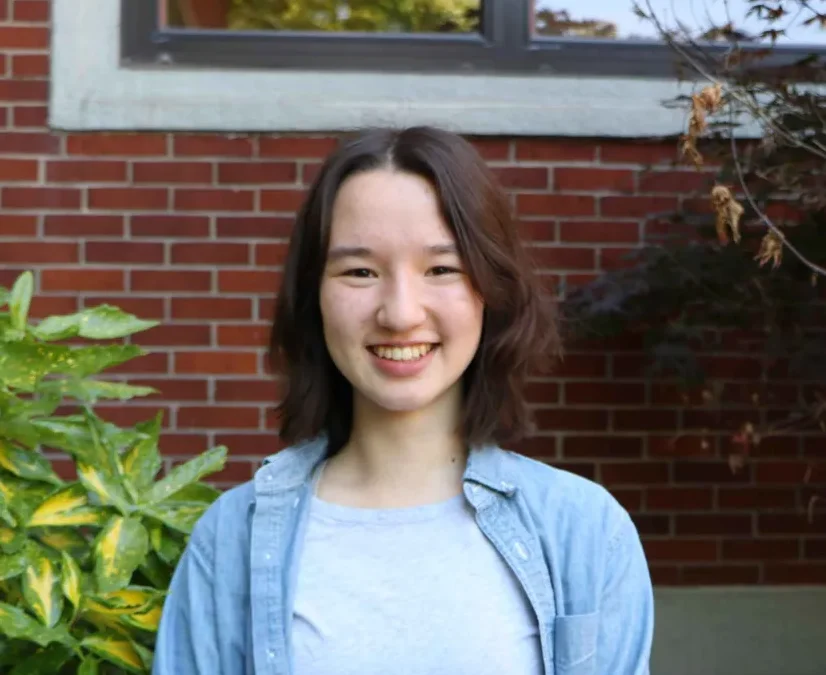
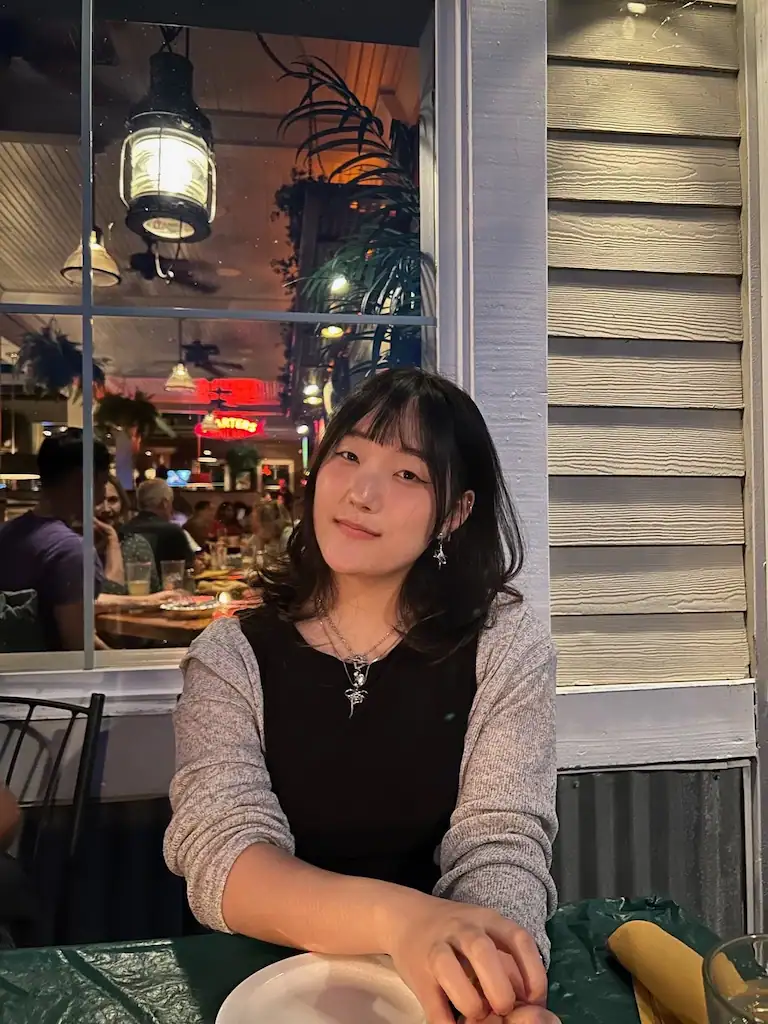
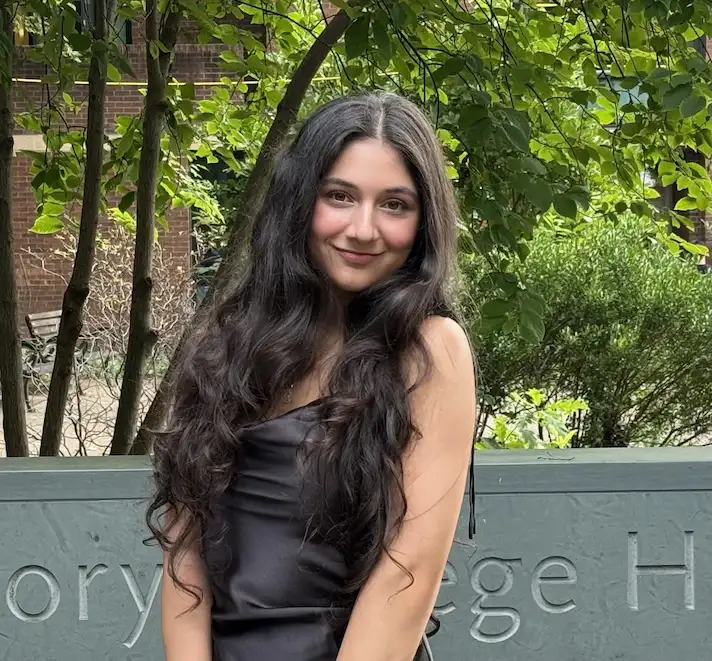
If none of them fits the timetable, the full chemistry tutor roster runs to 13 people.
The subject that turns into arithmetic overnight
For the first six weeks, grade 10 chemistry looks like grade 9 science with better vocabulary. Atoms, the periodic table, naming compounds. Students who are good at learning things do well, and everyone relaxes.
Then the mole arrives, and the subject changes character in about a fortnight. Suddenly every question is a conversion: grams to moles, moles to particles, moles to litres, and back again, usually two or three steps deep with units the student has never handled. The chemistry in those questions is often trivial. The arithmetic and the unit tracking are not.
This is why chemistry produces the sharpest grade drops of any grade 10 science. A student can understand a reaction perfectly and still score 40 percent on a stoichiometry test, because the marks were never for understanding the reaction. Parents see a cliff and assume the content got hard. Usually the content got quantitative, which is a different problem with a different fix.
What a 10th grade chemistry tutor actually works on
Sessions follow the student's own syllabus and assessment calendar. Across US and Canadian grade 10 chemistry courses that usually means:
Atomic structure and the periodic table. Electron configuration and periodic trends as one idea rather than two lists, which is what the periodic table standard most state frameworks use actually asks for.
Bonding and molecular geometry. Ionic against covalent, Lewis structures, VSEPR shapes, and polarity. This is the unit where drawing badly costs marks that knowing well cannot recover.
Naming and formula writing. Unglamorous, heavily weighted, and the fastest thing on this list to fix.
The mole and stoichiometry. Mole conversions, balanced equations, limiting reagents, and percent yield. Our stoichiometry guide was written for AP but the five problem types and the five-step method are exactly what grade 10 is being tested on.
Reaction types and net ionic equations. Synthesis, decomposition, replacement, combustion, and the solubility rules underneath precipitation reactions. The chemical reactions cheat sheet covers the same ground a grade 10 course does, one level deeper.
Solutions and molarity, where dimensional analysis either holds or it does not.
Gas laws and energy changes, in courses that include them.
Lab work and error analysis. Significant figures, percent error, and writing a conclusion that refers to the data rather than to what should have happened.
What sits outside the scope: producing a student's lab write-up, working through a take-home assessment with them, and running a science fair project. A tutor will teach the chemistry a lab is demonstrating and will discuss how a conclusion should be built. Handing over finished work is a different service and not one worth buying.
Gia Kim reads Chemistry and Chemical Biology at Cornell, scored 1570 on the SAT, and has tutored for three years alongside clinical research at Mount Sinai. She is on this page because she is studying the actual subject, which matters more in chemistry than in most subjects: the person who has taken the course two levels above yours knows which shortcuts break later.
Where grade 10 chemistry sits in the four-year science sequence
Chemistry is the hinge of the high school science sequence. It sits between the descriptive science that came before it and the quantitative science that follows, and more senior courses depend on it than on any other single year.
What came before it
Most sophomores arrive from a grade 9 science year that touched chemistry rather than taught it. If your student did a dedicated 9th grade chemistry course, they have met atomic structure and probably balanced a few equations, and the grade 10 jump is a step rather than a leap.
If they came through an integrated or general science year, expect the first two units to move faster than they can absorb. Students who took 9th grade physics have one real advantage here, which is that they have already done unit conversion under exam conditions and know it is a skill rather than an annoyance.
The maths matters more than the science did. Grade 10 chemistry assumes the ratio and rearrangement fluency that 9th grade math was meant to build, and a student shaky there will read a mole problem as chemistry they cannot do. If several subjects went badly last year rather than one, the grade 9 program is the better starting point, and it covers the grade 9 electives and humanities where a timetable problem often hides.
What is running alongside it this year
Very few sophomores take chemistry alone. Most are also carrying 10th grade biology, and the two courses meet in the cellular energetics unit, where photosynthesis and respiration are chemistry problems set inside a cell. A chemistry gap frequently shows up first as a biology grade, which is why the diagnosis is worth doing properly.
A smaller group is carrying 10th grade physics in the same year. Those students are being asked to do quantitative reasoning in two courses at once, and they are the ones most likely to need help with method rather than content.
Then there is the maths itself. 10th grade math, whether Algebra II or Geometry, is running the rearrangement skills that stoichiometry is quietly testing. Running chemistry and maths with one tutor is common for exactly this reason, because the algebra gets fixed inside the chemistry problem where the student actually needs it.
Beyond the sciences, the full grade 10 subject list covers English II, US History, languages, computer science, and the electives. When more than one subject is slipping at once the grade 10 hub is the better starting point, because that is a workload problem rather than a chemistry problem.
What it decides for grades 11 and 12
More than any other grade 10 course. AP Chemistry, AP Biology, and most honors science streams in grade 11 assume a solid chemistry year behind them, and placement decisions are made on this transcript line.
Students who hold it move into 11th grade chemistry or straight into AP with room to spare. Students who do not end up rebuilding stoichiometry during junior year while simultaneously meeting equilibrium and thermodynamics, which is a bad trade at the worst possible time.
The knock-on reaches sideways too. 11th grade biology leans on chemistry the moment biochemistry starts, and 11th grade physics shares the same quantitative habits. Meanwhile 11th grade math moves into pre-calculus just as formal test prep begins, so junior year has no slack in it at all.
The grade 11 hub maps that year including its electives and humanities subjects, which are usually where the hours actually go missing.
By senior year the sequence has separated. 12th grade chemistry is close to a first-year university course, and students on a pre-med or engineering path are running 12th grade biology or 12th grade physics beside it.
Underneath all of it sits 12th grade math at calculus level, which is where the workload actually breaks people.
The grade 12 hub covers the final year, including the electives and humanities that quietly consume the study hours. The whole four-year path sits on the high school tutoring hub, which is the right link if you are planning rather than firefighting.
You tell us the course and the unit.
Not "she needs chemistry help", but "honors chemistry, the stoichiometry test came back at 54, bonding starts in two weeks." Course name, textbook, and the next assessment date are what make a real match possible.
2
A person picks the tutor.
Chemistry splits into a calculation half and a conceptual half, and tutors are rarely equally strong at both. A student drowning in mole conversions needs a different person from one who cannot draw a Lewis structure.
3
The $50 diagnostic hour.
Sixty minutes, one-on-one, spent working out whether the problem is the chemistry, the arithmetic, or the unit tracking. Those three look identical on a report card and need completely different work. It ends with a written plan and a feedback summary.
4
Personalized sessions with progress reports.
Based on the diagnostic, the tutor builds a session-by-session plan. Your child gets bi-weekly progress updates. If the match is not right, we change it for free.
What sessions actually look like
Every session is online, private, one-on-one, and 60 minutes, on a shared whiteboard. Chemistry needs the whiteboard more than most subjects, because Lewis structures, reaction pathways, and multi-step conversions all have to be written out line by line while the student watches, then written again by the student while the tutor says nothing.
Three things are needed from you and none of them take long to find: the course or textbook name, the two most recent marked assessments, and when the next two are scheduled. The marked papers do most of the diagnostic work. A tutor can look at a returned chemistry test and see within a few minutes whether the student is losing marks on setup, on arithmetic, on units, or on genuinely not knowing the chemistry, and those four have four different fixes.
Homework between sessions is narrow on purpose. Eight mole conversion problems aimed at one specific error will move a grade further than fifty mixed questions, which mostly give a student more opportunities to repeat the mistake.
Where a student needs two sciences held together, the same tutor can often cover both. Several people on the biology tutor roster also teach chemistry, and the overlap matters most in the cellular energetics unit where the two courses genuinely share content.
Why grade 10 chemistry is really a maths course
This is the part most tutoring pages skip, and it is the single most useful thing a parent can understand about the subject.
Chemistry at this level rests on one standard that state frameworks state almost mathematically: that atoms, and therefore mass, are conserved during a chemical reaction, and that students should use mathematical representations to support that claim. Everything in the stoichiometry unit is an application of that one idea. It is a proportional reasoning course wearing a lab coat.
That has a practical consequence. When a chemistry grade drops, check the maths before buying chemistry help. If the student cannot confidently rearrange a formula for a variable that is not isolated, cannot track units through a three-step conversion, and does not automatically estimate whether an answer is plausible, then the chemistry tutoring will be treating a symptom. Running the maths course alongside it, ideally with the same tutor, is often the faster route.
It also explains a pattern that surprises families later. The habits built here transfer directly to the ACT science section, which tests reading data and reasoning proportionally rather than recalling science, and the ACT tutor roster is staffed by people who scored 34 to 36 on exactly that.
The SAT has no science section, but its maths module leans hard on ratio and unit reasoning, so the same work pays twice. Most families begin one-to-one SAT preparation in grade 11, which makes grade 10 the year the foundation is either built or quietly skipped, and the PSAT that autumn decides National Merit eligibility before anyone feels ready for it.
If you have not chosen a test yet, do not choose in grade 10. Our SAT and ACT comparison sets out the real differences, and for a strong chemistry student the answer is less obvious than it looks.
What 10th grade chemistry tutoring costs
The diagnostic hour is $50 and runs a full 60 minutes. After that the published high school rates are package based: 15 lessons at $915, which works out at $61 a lesson, or 20 lessons at $1,180, which is $59 a lesson. Upgrade within 48 hours of the diagnostic and the $50 is credited toward the package.
Package length moves the number and nothing else does. A chemistry session and a maths session cost the same, the tutor's university makes no difference to the rate, and a student running two subjects pays the same per lesson as one running one.
Worth knowing what you are comparing against, because this category hides price more than most. Of the five competitors examined for this page, four publish no rate at all on their chemistry pages, one publishes an average of about $39 an hour, and marketplace tutors advertise from roughly $20 an hour with no screening standard behind the listing. Those are genuinely different products and the table below sets out how.
How to choose a Grade 10 chemistry tutor
Six checks worth running on anyone, including us.
Did the tutor actually study chemistry? Chemistry attracts generalists, because it looks teachable from a distance by anyone with a science degree. Ask what they majored in. A chemistry, chemical engineering, or biochemistry background is a different proposition from a general science tutor who covers eight subjects.
Will they diagnose before they teach? The right first question is whether the marks are being lost on chemistry, arithmetic, or units. A tutor who opens by re-explaining the unit has skipped the only step that matters.
Can you see who will teach, before you book? A first name and a photo is not a credential. A profile page naming a university and a major is, and everyone on the roster above has one you can open without giving us an email address.
How fast can they start, and does it matter? A marketplace tutor starts tonight; a vetted match takes a few days. If the test is Thursday, the honest answer is that the marketplace may serve you better this week.
What happens when the match is wrong? Ask before you book. Refunds, credits, and swapping tutors are three separate things and most providers blur them deliberately.
Do they hold a teaching qualification? The tutors here are subject specialists with strong university records rather than licensed classroom teachers. For a student with an IEP or a diagnosed learning difference, a provider staffed by certified teachers is usually the better choice, and that is what we will say on the first call.
Numbers 4 and 6 are the two where a competitor frequently comes out ahead of us. Including them is the point: a checklist written so that one provider passes every item is marketing, not a checklist.
Tutor insight
Lia Hansen studies at Dartmouth, scored 1580 on the SAT and a 5 in AP Chemistry, and works in the Mirica Lab in Dartmouth's chemistry department synthesising metal organic frameworks for toxin absorption. She is worth listening to on the bonding unit specifically, because bonding and molecular geometry are what she manipulates for a living rather than a topic she revised once.
If your 10th grader is heading for AP Chemistry
AP Chemistry is widely considered one of the harder AP sciences, and the reason is visible from grade 10: it takes the quantitative work a sophomore is meeting now and runs it through equilibrium, thermodynamics, and electrochemistry, where the maths does not get easier and the concepts get abstract. A student who leaves grade 10 shaky on stoichiometry does not have a difficult junior year. They have an impossible one.
Start with the free material rather than paying anyone. The AP Chemistry resource hub indexes cheat sheets for all nine units plus a formula sheet, and none of it is behind a signup.
Read the hardest AP Chemistry units guide next, even a year early. It names equilibrium, thermodynamics, and electrochemistry as the three that break students, and every one of them rests on the mole work being taught right now. That is the argument for fixing grade 10 properly rather than getting through it.
When self-study stops being enough, NAT's AP tutoring covers every AP subject on the roster, and several chemistry tutors teach AP Biology alongside it. For students already looking seriously at medicine, the MCAT program is staffed by tutors who came up through this exact sequence, which is worth knowing in grade 10 for one reason: it shows the path is continuous, and the unit-tracking habit built this term is the one being used in eight years.
NAT's platform is entirely online. Sessions use video, screen sharing, and a shared digital whiteboard. Students work through problems in real time, not by watching the tutor solve them. Tutors can annotate, graph, and build worked examples live during the session.
The one situation where in-person tutoring has an edge is with younger students who struggle to stay focused on a screen. For most 10th graders, that is not a significant barrier.
Grade 10 chemistry help, five options compared
Two rows there are free and one of them is genuinely excellent for this subject. If your child understands the method and just needs a topic explained again, use the video and keep your money. Pay for a tutor when nobody can tell you why the marks are being lost.
Who this is right for, and who it is not
A good fit when:
The grade fell at a specific unit, and stoichiometry is the usual suspect
The student can explain the chemistry out loud but cannot get the number right
Chemistry and maths are both wobbling, and it is not clear which is causing which
AP Chemistry or honors science in grade 11 is the goal
The family wants to know the tutor's name, university, and major before paying
Not a good fit when:
The test is in three days and nothing has been started. Stoichiometry cannot be rebuilt that fast, and anyone who says otherwise is selling.
The student needs formal accommodation or an IEP-aligned approach. A certified teacher service is the better call.
Free video would fix it. If the student has the method and needs one topic re-explained, that is a free problem.
What is actually wanted is homework completion. That is not what these tutors do.
What we can show you, and what we cannot
Here is the evidence and its limits. Every tutor named on this page has a profile you can open right now, and the credentials are checkable: a Cornell Chemistry and Chemical Biology major, a Dartmouth student doing synthesis work in a chemistry lab with a 5 in AP Chemistry, and four years of AP Chemistry tutoring from a UPenn pre-med. Beyond the individual tutors, North American Tutors publishes service-wide numbers: 59,950+ lessons, 4,950+ students, 30+ countries, and 92 percent of students gaining two or more letter grades or 90 or more SAT points.
The 92 percent figure comes with no cohort size, no measurement window, and no stated method. Treat it as what it is, a number the company publishes about itself, and weigh it accordingly against the tutor credentials above, which you can verify yourself in about four minutes.
Two things are missing and both are worth naming. There is no chemistry case study: the published student case studies are real and detailed and every single one is SAT, ACT, or MCAT. And there is no third-party review rating anywhere, which matters more in this category than the last two, because at least one competitor on this SERP carries a verified public rating and NAT carries none. That is why no stars appear on this page. When a grade 10 chemistry result is documented properly, with permission, it will be published here.

FAQ’s